About $50 a Week Free

7-Day Budget Meal Plan

A healthy, filling week for one person from one discount-store shop. Four batch cooks, 100 g of protein a day, and almost nothing wasted.

Free to start · see your calorie and macro targets at no cost

~1,950
Daily calories
~100 g
Protein/day
~$50
Weekly cost
4 a week
Batch cooks

What this plan actually does

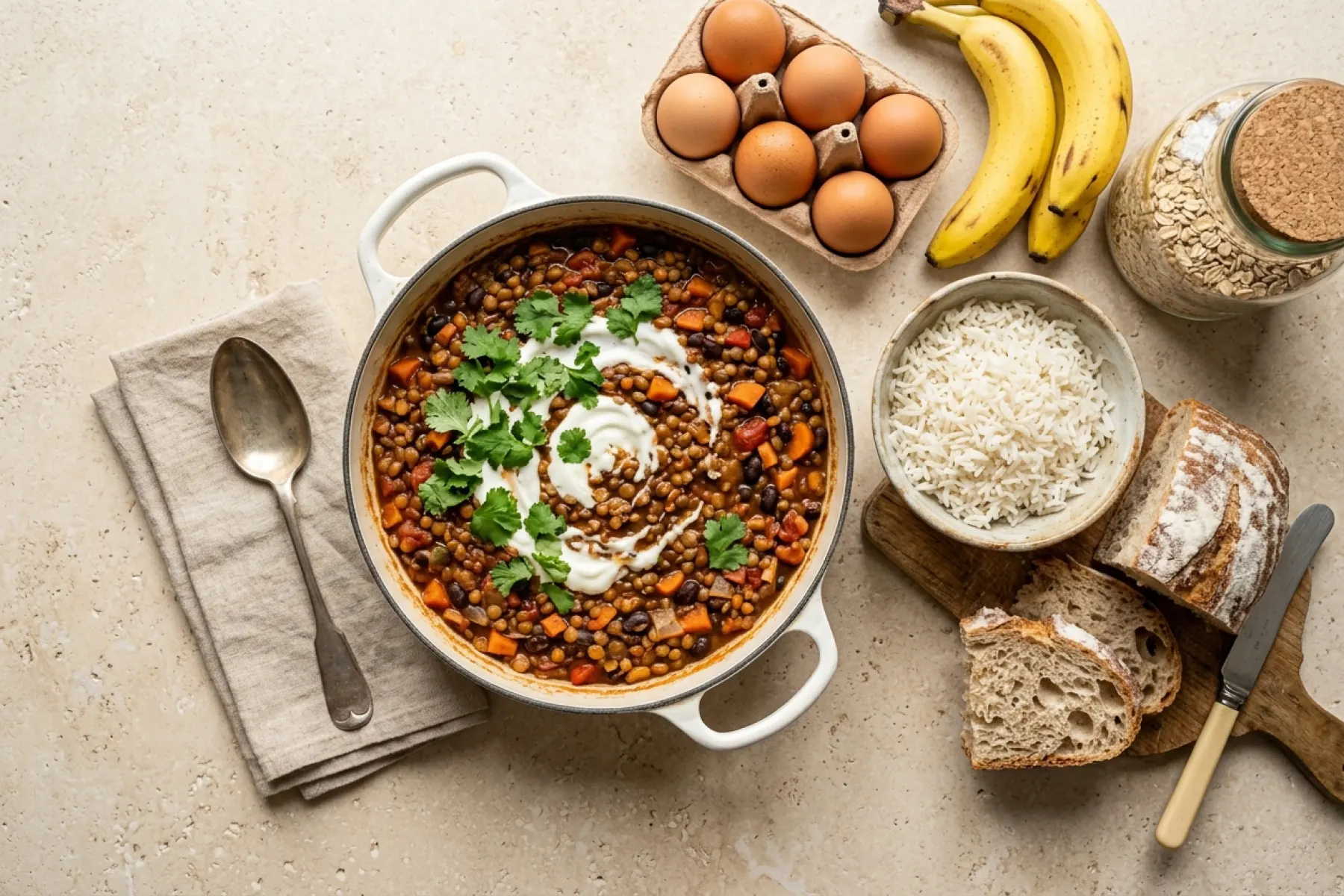
Eating cheaply and eating well are not opposites. The cheapest foods in the supermarket are also some of the healthiest: oats, eggs, lentils, beans, potatoes, cabbage, carrots, bananas and frozen vegetables. This plan builds a full week for one person out of those foods, at about 1,950 calories and 100 g of protein a day.

We estimate the shop at about $50 at US discount grocers like Aldi, Walmart and Lidl in 2026. The first shop runs a little higher, around $55–60, because oats, rice, peanut butter, spices and a bag of potatoes last well past one week. Week two costs less. Prices vary by region, and eggs move the most, so treat the total as a guide and check your own store.

The savings come from cooking in batches. One pot of lentil and black bean chili becomes three meals. A double batch of tuna pasta covers dinner and the next day’s lunch. One tray of roast chicken thighs feeds you twice. Fresh food is planned so it gets eaten, and what stays in the bag (potatoes, onions, cabbage, oats) keeps into next week, because food you throw away is the most expensive food there is.

A good fit if

  • Anyone feeding one person on about $50 a week
  • Students, new graduates and anyone between paychecks
  • People who want healthy food without buying anything unusual
  • Anyone who throws away too much food at the end of the week
  • Beginners who want simple recipes that are hard to get wrong

Talk to a doctor first if

  • Anyone who needs gluten-free or dairy-free food as written
  • People who dislike leftovers, since three meals are repeats
  • Anyone chasing a specific calorie target for fat loss (see swaps)
  • Athletes needing much more protein than 100 g a day
  • Households of four or more, where buying in bulk changes the numbers

The rules behind the plan

Four principles decide every meal below. Understand these and you can improvise for the rest of your life instead of following someone else’s menu forever.

1

Buy the cheapest healthy foods, not the cheapest foods

Every ingredient here is cheap and nutritious at the same time: oats, eggs, lentils, canned beans and tuna, chicken thighs, potatoes, cabbage, carrots, bananas and frozen vegetables. Nothing comes from a specialty aisle.

2

Four batch cooks cover the week

Monday’s chili feeds you three times. Tuesday’s tuna pasta and Saturday’s lentil Bolognese each feed you twice. Wednesday’s roast chicken covers Thursday’s lunch. Four cooks give you nine meals.

3

Nothing is bought for just one meal

Cabbage appears in a roast, a slaw and a hash. Frozen spinach goes into eggs, pasta and a curry. Food bought for one recipe and left to spoil is where most budget plans quietly lose money. What is left in the bag keeps for next week.

4

Frozen and canned do the heavy lifting

Frozen vegetables and canned tomatoes, beans and tuna are as nutritious as fresh for these meals, they cost less, and they don’t go off before you use them.

The full 7-day plan

Every meal, with calories and macros per portion. Daily totals are calculated from the meals themselves.

Day1

Monday

Big-pot chili night
2,001 kcal 82g protein 305g carbs 56g fat
Breakfast 8 min

Peanut Butter Banana Oats

60 g oats cooked in 250 ml milk, topped with a sliced banana and 15 g peanut butter.

530 kcal P 21g C 78g F 17g
Lunch 12 min

Egg Fried Rice with Frozen Veg

70 g dry rice, cooked and cooled, stir-fried in 10 g oil with 2 eggs, 120 g frozen mixed vegetables and 2 tsp soy sauce.

579 kcal P 22g C 73g F 21g
Dinner 40 min

Lentil & Black Bean Chili with Rice

One of three portions from a big pot of red lentils, black beans, chopped tomatoes, onion, carrot and chili spices, over 50 g dry rice with 40 g plain yogurt.

698 kcal P 32g C 129g F 9g
Snack 1 min

Apple & Cheddar

A large apple with 25 g cheddar.

194 kcal P 7g C 25g F 9g

Day 1 note: The chili pot: 150 g red lentils, 2 cans black beans (drained), 2 cans chopped tomatoes, 150 g each of onion and carrot, 15 g oil, chili powder and cumin. It makes three portions: tonight, Tuesday’s lunch and Thursday’s dinner. Cook 120 g of rice in the morning to cover lunch and dinner.

Day2

Tuesday

Cook two, eat one
1,955 kcal 110g protein 287g carbs 46g fat
Breakfast 8 min

Scrambled Eggs on Toast

2 eggs scrambled in 5 g butter with 50 g frozen spinach, on 2 slices of toast.

380 kcal P 21g C 37g F 16g
Lunch 10 min in a microwave

Chili-Topped Baked Potato

A 250 g baked potato loaded with the second portion of Monday’s chili and 20 g grated cheddar.

764 kcal P 37g C 131g F 14g
Dinner 20 min

Tuna & Tomato Pasta

90 g pasta in a sauce of chopped tomatoes, onion, garlic and 60 g frozen spinach cooked in 8 g oil, with a can of tuna (110 g drained) stirred through.

630 kcal P 46g C 89g F 11g
Snack 2 min

Yogurt with Banana

150 g plain yogurt with a sliced banana.

181 kcal P 6g C 30g F 5g

Day 2 note: Make the pasta for two: 180 g pasta, 2 cans of tuna and 1 can of tomatoes. Box the second portion for Wednesday’s lunch.

Day3

Wednesday

Roast tray night
1,958 kcal 114g protein 270g carbs 50g fat
Breakfast 8 min

Apple Cinnamon Oats

70 g oats cooked in 250 ml milk with half a grated apple, 15 g raisins and cinnamon.

487 kcal P 18g C 85g F 10g
Lunch 3 min

Leftover Tuna Pasta

Tuesday’s second portion, cold or reheated.

630 kcal P 46g C 89g F 11g
Dinner 45 min

Roast Chicken Thighs, Potatoes & Cabbage

160 g boneless, skinless chicken thighs roasted with 250 g potatoes, a carrot and wedges of cabbage in 10 g oil and paprika.

537 kcal P 39g C 58g F 17g
Snack 3 min

Peanut Butter Toast

2 slices of toast with 20 g peanut butter.

304 kcal P 11g C 38g F 12g

Day 3 note: Roast 290 g of chicken thighs: 160 g tonight and 130 g sliced for Thursday’s wrap. Cabbage roasts sweet and costs less per portion than almost any other vegetable.

Day4

Thursday

Leftovers do the work
1,952 kcal 102g protein 255g carbs 63g fat
Breakfast 3 min

Yogurt, Oats & Banana

250 g plain yogurt with 60 g oats stirred through and a sliced banana.

469 kcal P 18g C 75g F 12g
Lunch 8 min

Chicken & Crunchy Slaw Wrap

Wednesday’s 130 g roast chicken in a large tortilla with 20 g cheddar and a slaw of shredded cabbage and carrot in 30 g yogurt.

494 kcal P 38g C 43g F 18g
Dinner 10 min

Chili Cheese Quesadilla

The last portion of chili: half folded into a large tortilla with 25 g cheddar and toasted in a dry pan, the rest spooned on the side.

793 kcal P 39g C 120g F 20g
Snack 2 min

Carrot Sticks & Peanut Butter

120 g carrot sticks with 25 g peanut butter to dip.

196 kcal P 7g C 17g F 13g

Day 4 note: Three meals from one pot of chili is where most of this week’s savings come from.

Day5

Friday

Takeout-style curry
1,906 kcal 121g protein 212g carbs 65g fat
Breakfast 8 min

Egg & Spinach Toast

3 eggs scrambled in 5 g butter with 50 g frozen spinach, on 2 slices of toast.

451 kcal P 27g C 38g F 21g
Lunch 10 min

Tuna Melt Sandwich & Apple

A can of tuna (110 g drained) mixed with 20 g yogurt on 2 slices of bread under 30 g grilled cheddar, with an apple.

525 kcal P 43g C 56g F 14g
Dinner 30 min

Chicken & Spinach Curry with Rice

160 g chicken thighs simmered in 10 g oil with chopped tomatoes, onion, curry powder and 80 g frozen spinach, finished with 60 g yogurt, over 80 g dry rice.

706 kcal P 45g C 87g F 20g
Snack 1 min

Banana & Peanut Butter

A large banana with 20 g peanut butter.

224 kcal P 6g C 31g F 10g

Day 5 note: Curry powder, a can of tomatoes and a spoon of yogurt make a takeout-style curry for a fraction of the delivery price.

Day6

Saturday

Weekend cook-up
1,965 kcal 82g protein 282g carbs 62g fat
Breakfast 15 min

Banana Oat Pancakes

50 g oats blended with an egg, a banana and 60 ml milk, fried in 5 g oil, served with 80 g yogurt and 10 g honey.

503 kcal P 19g C 72g F 17g
Lunch 25 min

Potato, Egg & Cabbage Hash

250 g diced potato fried with shredded cabbage and onion in 10 g oil, topped with 3 eggs cooked in the same pan.

540 kcal P 26g C 55g F 25g
Dinner 35 min

Lentil Bolognese

Red lentils simmered with chopped tomatoes, carrot and onion into a thick sauce, over 90 g pasta with 15 g grated cheddar.

723 kcal P 32g C 124g F 13g
Snack 5 min

Stovetop Popcorn

40 g popcorn kernels popped in a lidded pan with 5 g oil and a pinch of salt.

199 kcal P 5g C 31g F 7g

Day 6 note: The Bolognese makes two portions: 100 g red lentils, 1 can of tomatoes, 120 g carrot, 100 g onion and 10 g oil. The second is Sunday’s lunch.

Day7

Sunday

Empty the fridge
1,932 kcal 97g protein 269g carbs 54g fat
Breakfast 8 min

Egg & Cheese Breakfast Burrito

2 eggs scrambled in 3 g oil with 40 g frozen spinach and 20 g cheddar, wrapped in a large tortilla.

463 kcal P 24g C 36g F 25g
Lunch 12 min

Leftover Lentil Bolognese

Saturday’s second portion of sauce over 90 g freshly cooked pasta with 15 g cheddar.

723 kcal P 32g C 124g F 13g
Dinner 25 min

Soy-Glazed Chicken, Rice & Veg

120 g chicken thighs pan-fried in 5 g oil and glazed with 1 tbsp soy sauce and 5 g honey, with 70 g dry rice and 150 g frozen mixed vegetables.

576 kcal P 35g C 81g F 11g
Snack 2 min

Yogurt & Apple

150 g plain yogurt with a chopped apple and cinnamon.

170 kcal P 6g C 28g F 5g

Day 7 note: Cook next week’s chili today. The oats, rice, peanut butter and spices are already in the cupboard, which is why week two costs less than week one.

Week at a glance
1,953 kcal · 268.6g net carbs, averaged across 7 days
Personalise my plan

The grocery list

One person, seven days, about $50 at a US discount grocer (our 2026 estimate; prices vary by store and region). Oats, rice, pasta, peanut butter and spices last into week two.

0 of 29 ticked · ticks are saved in this browser.

Meat, fish & eggs

3

Dairy

4

Produce

7

Frozen

2

Pantry & bakery

13

If the plan does not fit you

No fixed plan survives contact with a real person’s allergies, budget and schedule. These are the swaps that keep the macros intact.

Cooking for two

Double every meal. The cupboard staples don’t double, so two people usually cost less than twice as much.

Vegetarian

Swap the chicken for extra eggs, chickpeas or a fourth portion of chili, and the tuna for canned beans with a little cheese. It gets cheaper, and protein drops to about 80 g.

You want to lose weight

Drop the afternoon snack and the week averages about 1,740. Our 1800 calorie plan is built for steady fat loss.

You need more food

Add an extra slice of peanut butter toast or a bigger portion of rice or oats. They are the cheapest calories in the plan.

Eggs are expensive this week

Swap egg breakfasts for oats, and top the fried rice and hash with a portion of canned beans instead.

You want it built around your store

The meal plan generator asks for your weekly budget and where you shop, then builds the week and the list around both.

What to eat, what to skip

Eat freely

  • Oats, rice, pasta and potatoes as your cheap, filling base
  • Eggs, the cheapest high-quality protein in most stores
  • Dried lentils and canned beans several times a week
  • Chicken thighs, which cost less than breasts and are harder to overcook
  • Canned tuna for quick lunches
  • Frozen vegetables and spinach, which never go off before you use them
  • Cabbage, carrots and onions, the cheapest fresh vegetables all year
  • Bananas and apples for snacks
  • Plain yogurt from a large tub rather than single pots

Leave these out

  • Shopping without a list, which is where impulse spending happens
  • Pre-cut vegetables, grated cheese and single-serve packs
  • Buying fresh produce you won’t use before it spoils
  • Branded products when the store brand is the same food
  • Meal-deal lunches and coffee-shop snacks during the week
  • Throwing out leftovers instead of planning them in
  • Sugary drinks, which cost money and add nothing filling

Where the money goes, and how to keep it low

A few habits decide whether a budget plan actually stays on budget.

Unit price
Check the shelf tag
Compare the price per kg or per lb, not per pack. Larger bags of oats and rice are usually far cheaper per portion
Store brands
Default to them
Canned tomatoes, beans, oats, rice and frozen vegetables are near-identical to branded versions
Leftovers
3–4 days
Keep cooked food in the fridge up to four days. Chili and Bolognese freeze for about three months
Egg prices
Can swing a lot
If eggs spike, lean on oats and beans for a week (see swaps)

Six things that make this week easier

Shop from the list and nothing else

Every item on the grocery list is used this week. Sticking to it is the single biggest saving.

Cook in batches on purpose

The chili, tuna pasta, roast chicken and Bolognese are all cooked once and eaten two or three times. That saves money, gas or electricity, and about four evenings of cooking.

Let the freezer do the work

If you won’t eat a leftover within three days, freeze it the night you cook it. A freezer portion of chili is a future meal that costs nothing.

Beans and lentils stretch meat

Half lentils and half meat in a chili or Bolognese cuts the cost sharply and adds fibre, and most people can’t tell the difference.

Know what you actually need

This plan gives about 1,950 calories. The calorie calculator tells you whether to add a snack or drop one.

Meal plan generator

This plan is built for an average person. You are not one.

The menu above assumes about 1,953 calories a day and no allergies. Give us your height, weight, goal and the foods you refuse to eat, and the generator rebuilds this entire week around your actual numbers: recipes, macros and a fresh grocery list included.

Free to start · see your calorie and macro targets at no cost

Questions people ask about this plan

Can you really eat healthy for $50 a week?

Yes, for one person, if you cook most meals and batch cook. The cheapest foods, like oats, eggs, lentils, beans, potatoes, cabbage and frozen vegetables, are also some of the most nutritious. The cost comes down to cooking in batches and wasting nothing.

Where do the prices come from?

They are our estimate of typical 2026 shelf prices at US discount grocers such as Aldi, Walmart and Lidl, using store brands. Your total will depend on your region and store. Eggs and fresh produce move the most, while canned and dried foods stay steady.

Is this enough food?

It gives about 1,950 calories a day, which is close to maintenance for many adults. If you are hungry, add peanut butter toast or a larger portion of oats or rice. They are the cheapest calories in the plan.

How much protein does a budget meal plan give?

About 100 g a day, from eggs, chicken thighs, canned tuna, lentils, black beans, yogurt and cheese. That is comfortably above what most adults need, without protein powder or expensive cuts of meat.

Can I make this for two people or a family?

Yes. Double or triple the meals. Staples like oats, rice, oil and spices don’t scale in a straight line, so a larger household usually spends less per person than one person does.

Can I make it vegetarian?

Yes, and it gets cheaper. Replace the chicken with eggs, chickpeas or extra chili, and the tuna with canned beans. Protein drops to about 80 g a day, which is still enough for most adults.

Are frozen and canned foods healthy?

Yes. Frozen vegetables are frozen soon after picking and keep their nutrients well. Canned beans, tomatoes and tuna are nutritious and cheap. Choose low-salt versions where you can, and rinse canned beans to cut the salt further.

How long do the leftovers keep?

Keep cooked food in the fridge for up to four days, which is why every leftover here is eaten within three. Chili and lentil Bolognese freeze well for about three months.

Can I lose weight on this plan?

At about 1,950 calories it is close to maintenance for many adults. To lose weight, drop the afternoon snack or use our 1800 calorie plan, which uses the same kind of everyday food.

Can I get a plan built around my own budget?

Yes. The meal plan generator asks for your weekly budget, where you shop and what you eat, then builds a 7-day plan with a grocery list to match.
Medical disclaimer. This plan is general nutrition information, not medical advice. Calorie and macro figures are estimates for the portions described and will vary with brands, cuts and cooking method. Talk to a doctor or registered dietitian before starting any new diet, especially if you are pregnant, breastfeeding, managing a medical condition, or taking medication that needs dosing around food.