Vegan Free

7-Day Vegan Meal Plan

Fully plant-based, 78 g of protein a day, and not a single substitution needed — tofu, tempeh, legumes and grains built into real meals from the ground up.

~1,810
Daily calories
~78 g
Protein/day
~38 g
Fibre/day
10-35 min
Cook time

What this plan actually does

A vegan diet built well has no protein problem — it has a planning problem, and this plan is the planning done for you. Every meal here is designed from real plant proteins, not a meat product with the meat removed, which is why nothing on this page tastes like it is missing something.

The two things worth genuinely paying attention to on a vegan diet are B12 and, to a lesser extent, iron and omega-3s. B12 is not naturally present in plant foods at meaningful levels, and this plan assumes a B12 supplement or fortified foods — covered properly in the FAQ below, because it is the one non-negotiable part of eating this way long-term.

At roughly 1,810 calories and 38 g of fibre a day, this plan sits close to maintenance for a smaller or moderately active adult, with fibre intake more than double what a typical diet provides — expect that to take a few days to adjust to if you are coming from a lower-fibre way of eating.

A good fit if

  • Anyone newly vegan or seriously considering it
  • People already eating mostly plant-based who want it properly structured
  • Anyone worried a vegan diet cannot hit adequate protein
  • A genuinely sustainable long-term pattern, not a short detox
  • Ethical, environmental or health-motivated eaters wanting real meals, not a list of what to avoid

Talk to a doctor first if

  • Anyone unwilling to take a B12 supplement or eat fortified foods regularly
  • People needing a much higher protein target for serious strength training without adjustment
  • A coeliac diagnosis, without swapping the wheat-based items
  • Anyone expecting meat-substitute products — this plan is built from whole foods and minimally processed plant proteins instead
  • Very young children or pregnant women without dedicated medical and dietary guidance

The rules behind the plan

Four principles decide every meal below. Understand these and you can improvise for the rest of your life instead of following someone else’s menu forever.

1

Protein is combined, not concentrated

Tofu, tempeh, lentils, chickpeas, beans, peanut butter and wholegrains all contribute, spread across the day rather than relying on one "hero" ingredient at every meal.

2

Every dish is naturally vegan, not adapted

A Buddha bowl, a chickpea curry, a peanut noodle stir fry — these are dishes that were never built around meat in the first place, which is why they need no substitution and taste complete on their own terms.

3

B12 is handled directly, not left to chance

Nutritional yeast and fortified plant milk appear through the week, and a daily B12 supplement is assumed — the one part of vegan eating that food alone genuinely cannot reliably cover.

4

Fibre is intentionally high

At 38 g a day this plan sits well above even the balanced and vegetarian plans on this site — a real strength of whole-food plant eating, though worth increasing gradually if your gut is not used to it yet.

The full 7-day plan

Every meal, with calories and macros per portion. Daily totals are calculated from the meals themselves.

1

Day 1

Monday
Getting started
1,850 kcal 70g protein 217g net carbs 72g fat
Breakfast 4 min + overnight

Overnight Oats with Peanut Butter & Banana

60 g oats soaked in 250 ml fortified soy milk overnight, with sliced banana and 15 g peanut butter.

480 kcal P 18g C 66g F 16g
Lunch 10 min

Chickpea & Avocado Bowl

220 g chickpeas with a quarter avocado, cherry tomatoes, cucumber and a tahini-lemon dressing over mixed greens.

530 kcal P 20g C 52g F 24g
Dinner 25 min

Crispy Tofu Stir Fry with Rice

180 g firm tofu, cubed and pan-fried until crisp, with peppers and broccoli over 150 g cooked rice, in a soy-ginger sauce.

590 kcal P 26g C 74g F 18g
Snack 1 min

Apple & Almonds

One apple with 25 g almonds.

250 kcal P 6g C 25g F 14g

Note: Press the tofu for 15 minutes before cooking — the single biggest difference between crispy cubes and something soft and forgettable.

2

Day 2

Tuesday
Legume day
1,730 kcal 66g protein 252g net carbs 49g fat
Breakfast 4 min

Green Smoothie with Nut Butter

Fortified soy milk blended with spinach, banana, frozen mango and a tablespoon of almond butter.

420 kcal P 14g C 60g F 14g
Lunch 30 min

Lentil & Vegetable Soup with Sourdough

A deep bowl of red lentil, carrot and celery soup with two slices of sourdough and a drizzle of olive oil.

500 kcal P 22g C 74g F 12g
Dinner 35 min

Black Bean & Sweet Potato Chilli

Black beans, roasted sweet potato, peppers and tomato with chipotle, over 150 g cooked rice.

610 kcal P 22g C 100g F 12g
Snack 2 min

Hummus & Vegetable Sticks

60 g hummus with carrot and cucumber sticks.

200 kcal P 8g C 18g F 11g

Note: Make a double batch of chilli — it freezes perfectly and covers a fast dinner later in the month.

3

Day 3

Wednesday
Tempeh day
1,860 kcal 74g protein 232g net carbs 69g fat
Breakfast 12 min

Tofu Scramble on Toast

150 g crumbled firm tofu scrambled with turmeric, nutritional yeast and spinach, on two slices of wholegrain toast.

440 kcal P 22g C 40g F 20g
Lunch 5 min

Leftover Chilli Bowl

Tuesday’s chilli reheated with fresh avocado and a squeeze of lime.

580 kcal P 20g C 92g F 14g
Dinner 25 min

Peanut Tempeh Noodles

150 g tempeh, pan-fried, with carrots and pak choi through 80 g dry noodles in a peanut-lime sauce.

630 kcal P 28g C 78g F 22g
Snack 1 min

Orange & Walnuts

One orange with 20 g walnuts.

210 kcal P 4g C 22g F 13g

Note: Tempeh has a firmer, nuttier texture than tofu and holds up better in a stir fry — no need to press it first.

4

Day 4

Thursday
Buddha bowl day
1,810 kcal 75g protein 220g net carbs 68g fat
Breakfast 3 min

Coconut Yogurt with Granola & Berries

200 g plain coconut or soy yogurt with 40 g granola and 100 g mixed berries.

440 kcal P 14g C 58g F 16g
Lunch 12 min

Falafel & Hummus Pitta

Four falafel in a wholemeal pitta with 40 g hummus, shredded lettuce, tomato and a squeeze of lemon.

540 kcal P 18g C 66g F 22g
Dinner 35 min

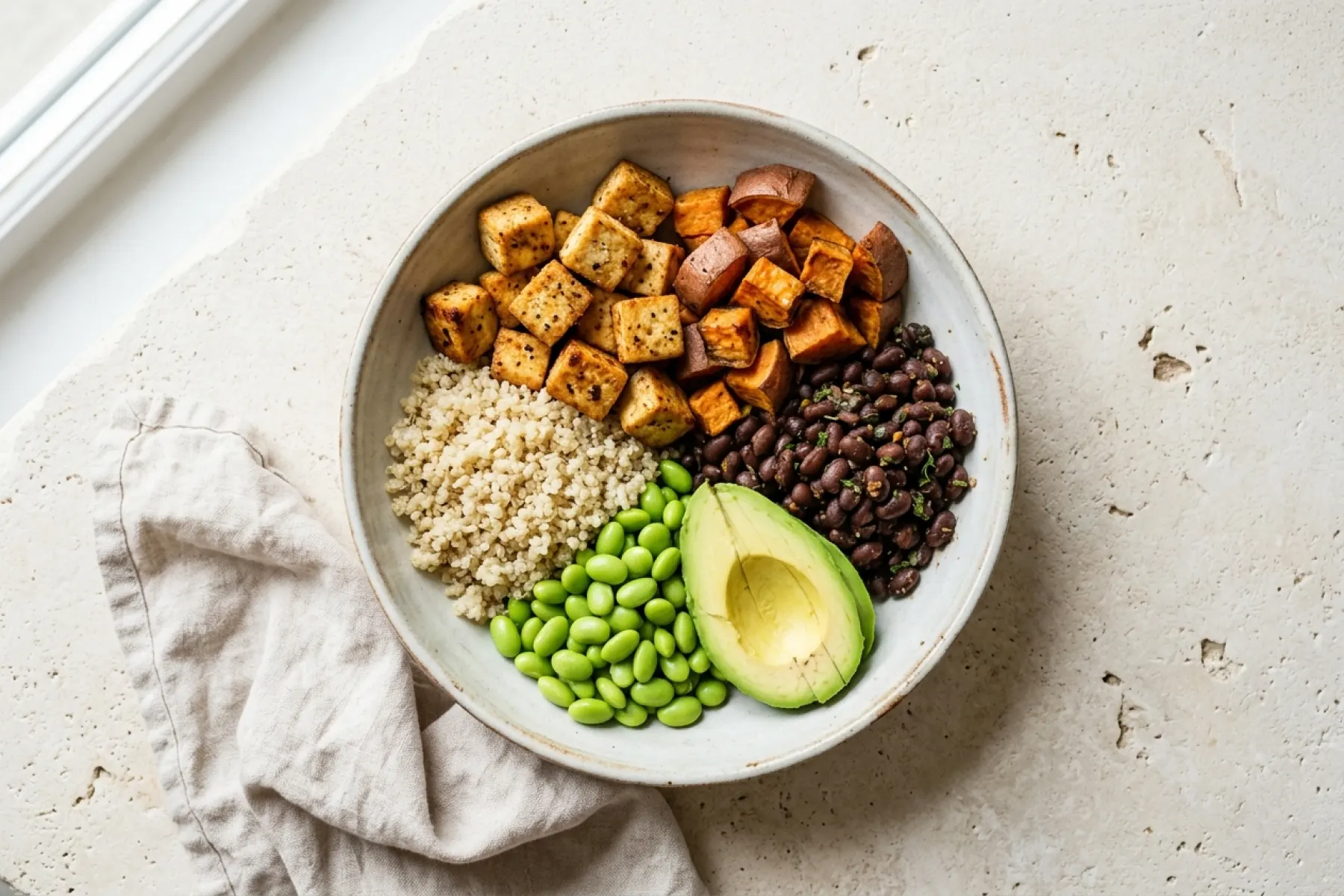
Roasted Vegetable Buddha Bowl with Tofu

Roasted sweet potato, broccoli and chickpeas with 120 g cubed tofu over 120 g cooked quinoa, with a tahini dressing.

640 kcal P 26g C 82g F 22g
Snack 4 min

Edamame

150 g steamed edamame in the pod with a little sea salt.

190 kcal P 17g C 14g F 8g

Note: Edamame is one of the highest-protein snacks on this entire plan — worth keeping a bag in the freezer permanently.

5

Day 5

Friday
Fast and easy
1,760 kcal 56g protein 252g net carbs 55g fat
Breakfast 4 min

Berry & Oat Smoothie

Fortified soy milk blended with 100 g frozen berries, a banana and 20 g oats.

420 kcal P 15g C 68g F 8g
Lunch 12 min in a microwave

Jacket Potato with Baked Beans

A 300 g baked potato with baked beans and a side salad dressed in olive oil.

480 kcal P 16g C 88g F 8g
Dinner 35 min

Homemade Vegan Pizza

A wholemeal base with tomato sauce, vegan cheese, mushrooms, peppers and olives, finished with rocket.

610 kcal P 20g C 82g F 20g
Snack 1 min

Dark Chocolate & Brazil Nuts

20 g of dairy-free 70% dark chocolate with 20 g brazil nuts.

250 kcal P 5g C 14g F 19g

Note: Most 70% dark chocolate is naturally dairy-free — check the label rather than assuming, since milk fat is sometimes added.

6

Day 6

Saturday
Weekend brunch
1,830 kcal 56g protein 226g net carbs 73g fat
Breakfast 8 min

Avocado Toast with Chilli Flakes

A whole mashed avocado over two slices of sourdough with chilli flakes, lemon and a scattering of hemp seeds.

460 kcal P 12g C 42g F 26g
Lunch 15 min

Quinoa Tabbouleh with Chickpeas

120 g cooked quinoa with parsley, tomato, cucumber and 200 g chickpeas, dressed in lemon and olive oil.

540 kcal P 20g C 66g F 20g
Dinner 30 min

Vegan Burger with Sweet Potato Wedges

A bean or lentil-based veggie burger in a bun with salad and baked sweet potato wedges.

610 kcal P 20g C 88g F 18g
Snack 2 min

Coconut Yogurt with Mango

150 g coconut yogurt with sliced mango.

220 kcal P 4g C 30g F 9g

Note: Check the veggie burger for a bean or lentil base rather than a highly processed patty — the ingredient list is usually shorter on the better ones.

7

Day 7

Sunday
Cook for the week
1,830 kcal 66g protein 264g net carbs 53g fat
Breakfast 20 min

Vegan Pancakes with Berries

Two banana-based pancakes with 100 g berries and a thin pour of maple syrup.

460 kcal P 12g C 78g F 10g
Lunch 30 min

Roasted Chickpea & Bulgur Bowl

Spiced roasted chickpeas over 150 g cooked bulgur with roasted vegetables and a tahini dressing.

580 kcal P 22g C 78g F 20g
Dinner 35 min

Lentil & Vegetable Dal with Rice

Red lentils simmered with tomato, spinach and warming spices, over 150 g cooked rice.

590 kcal P 26g C 92g F 10g
Snack 1 min

Trail Mix

A small handful of mixed nuts, seeds and dried fruit — about 35 g total.

200 kcal P 6g C 16g F 13g

Note: Make a double batch of dal — it freezes well and is one of the cheapest, highest-protein meals on this whole plan.

Week at a glance
1,810 kcal · 237.6g net carbs, averaged across 7 days
Build mine

The grocery list

One person, seven days. Tofu, tempeh, plant milk and vegan cheese are all standard supermarket items now — nothing here needs a specialist shop.

0 of 43 ticked — ticks are saved in this browser.

Plant protein

5

Dairy-free chilled

4

Produce

14

Pantry & freezer

20

If the plan does not fit you

No fixed plan survives contact with a real person’s allergies, budget and schedule. These are the swaps that keep the macros intact.

Vegetarian, happy to include eggs and dairy

Our vegetarian meal plan covers exactly that, with eggs and cheese built back in.

You want more protein

Add a scoop of pea or soy protein to the morning smoothie and an extra 50 g of tofu or tempeh to dinner — that alone pushes the daily total past 95 g.

Soy allergy or intolerance

Replace tofu and tempeh with extra lentils, beans and chickpeas, and swap soy milk for oat or pea milk — check both are still fortified with B12 and calcium.

Gluten free

Rice, quinoa, potato and gluten-free oats cover most starches here; the pizza base, wraps, noodles and sourdough are the items needing a genuine substitute.

You want faster weight loss

Trim starch portions by a quarter and drop the daily snack — that lands close to 1,500 calories on the same structure.

Nut allergy

Drop the almonds, walnuts and brazil nuts from snacks and swap peanut and almond butter for sunflower seed butter, which is nut-free.

What to eat, what to skip

Eat freely

  • Tofu and tempeh as regular protein sources, most days
  • Legumes — lentils, beans, chickpeas — in real portions, daily
  • Wholegrains: oats, brown rice, quinoa, bulgur, wholemeal bread
  • Vegetables at every lunch and dinner
  • Two or three pieces of fruit a day
  • Nuts, seeds, avocado and olive oil as the main fats
  • Fortified plant milk and yogurt, for calcium and B12
  • Nutritional yeast, a genuinely useful B12 and flavour source
  • Dark chocolate and bread in the portions written here

Leave these out

  • Relying only on fruit and vegetables without deliberate protein at each meal
  • Skipping a B12 supplement or fortified foods long term
  • Ultra-processed vegan convenience food as a daily default
  • Unfortified plant milk as your only dairy substitute
  • Sugary drinks and fruit juice in place of water
  • Assuming "vegan" on packaging automatically means healthy — vegan biscuits are still biscuits
  • Restarting on Monday instead of continuing from the next meal

The nutrients worth actually planning for

A well-planned vegan diet can meet nearly every nutrient need from food alone, with one clear exception. These four are worth knowing.

B12
Supplement, always
Not reliably available from plants at adequate levels — take a daily or weekly supplement
Iron
Pair with vitamin C
Lentils and beans with peppers, tomato or citrus improves absorption significantly
Omega-3
From flax and walnuts
Consider an algae-based omega-3 supplement for the EPA/DHA forms plants alone do not provide
Calcium
Fortified plant milk
Check the label — not all plant milks are fortified to the same level

Six things that make this week easier

Sort your B12 supplement first

This is the one part of vegan eating that is genuinely non-negotiable long term — a cheap daily or weekly tablet solves it completely, so do it before anything else on this list.

Buy legumes tinned for weekdays

A tin of lentils, chickpeas or black beans is ready in seconds and just as nutritious as cooking dried ones from scratch.

Press tofu, don’t skip tempeh’s marinade

Tofu needs pressing to crisp up properly; tempeh benefits from ten minutes in a sauce before cooking to soften its naturally firmer texture.

Keep nutritional yeast on the counter, not the cupboard

It is used often enough across this plan — scrambles, pasta, popcorn — that keeping it visible actually gets it used instead of forgotten.

Give your gut a week to adjust

Fibre roughly doubles compared to a typical diet on this plan. Some bloating in the first week is normal and settles as your gut bacteria adapt — drink more water and it passes.

Free generator

This plan is built for an average person. You are not one.

The menu above assumes about 1,810 calories a day and no allergies. Give us your height, weight, goal and the foods you refuse to eat, and the generator rebuilds this entire week around your actual numbers — recipes, macros and a fresh grocery list included.

No signup. No card. Takes about 30 seconds.

Questions people ask about this plan

Can you get enough protein on a vegan diet?

Yes. This plan reaches 78 g a day from tofu, tempeh, legumes and grains alone, which is adequate for a non-athlete. Combining different plant proteins across the day, rather than relying on one source, is what makes the total add up reliably.

Do I really need a B12 supplement?

Yes, this is the one part of a vegan diet that food alone cannot reliably solve. B12 is produced by bacteria, not plants, and deficiency develops slowly and can cause serious nerve damage if ignored for years. A cheap supplement removes the risk entirely.

Will I lose weight on a vegan meal plan?

It depends on whether 1,810 calories sits below your maintenance. Use the calorie calculator to find your number, then adjust portions rather than assuming vegan automatically means weight loss.

What is the difference between vegan and vegetarian?

Vegetarian allows eggs and dairy; vegan excludes all animal products entirely, including eggs, dairy, honey and any hidden animal-derived ingredients. See our vegetarian meal plan if you are happy including eggs and dairy.

Is tofu safe to eat every day?

Yes. Concerns about soy and hormones at normal dietary intakes are not supported by current evidence, and tofu is a complete, low-saturated-fat protein eaten daily across many long-lived populations.

Why does this plan include so much fibre?

Because whole-food plant eating naturally runs high in fibre — legumes, wholegrains, fruit and vegetables all contribute. At 38 g a day it is roughly double a typical diet, which is a genuine strength once your gut adjusts.

Can I build muscle on a vegan diet?

Yes, with adequate total protein and training, muscle gain on a vegan diet is well supported by research. You would likely want to push this plan’s protein higher, toward 120–150 g, alongside a structured strength programme.

What snacks fit a vegan diet?

Nuts, seeds, edamame, hummus with vegetables, fruit and dairy-free dark chocolate all fit naturally — all five appear across this plan’s snack slots.

Is a vegan diet more expensive?

Not necessarily — tofu, dried and tinned legumes, rice, oats and seasonal vegetables are among the cheapest foods in any supermarket. Costs rise mainly with heavily processed vegan convenience products, which this plan mostly avoids.

What do I do after seven days?

Repeat it, rotating the vegetables and legumes with the seasons. If you want a version built around your own calorie target and any allergies, the meal plan generator will build one in about thirty seconds.
Medical disclaimer. This plan is general nutrition information, not medical advice. Calorie and macro figures are estimates for the portions described and will vary with brands, cuts and cooking method. Talk to a doctor or registered dietitian before starting any new diet, especially if you are pregnant, breastfeeding, managing a medical condition, or taking medication that needs dosing around food.