Vegetarian Free

7-Day Vegetarian Meal Plan

No meat, no fish, 86 g of protein a day and food you would actually choose to eat — eggs, dairy, legumes and a lot of flavour doing the work.

~1,830
Daily calories
~86 g
Protein/day
~220 g
Carbs/day
10-35 min
Cook time

What this plan actually does

The most common worry about going vegetarian is protein, and it is almost always overstated. This plan sits at 86 g a day — above the RDA for most adults and close to what a typical omnivore actually eats — using nothing more exotic than eggs, Greek yogurt, cheese, chickpeas, lentils, beans and a little tofu.

Nothing here is pretending to be meat. There is no fake bacon or meat-substitute mince — the meals are built around foods that are naturally vegetarian and genuinely good: a proper paneer curry, a real mushroom risotto, a Mexican-style bean bowl. The plan works because the food is worth eating, not because it apologises for what it is missing.

At roughly 1,830 calories it sits close to maintenance for a smaller or moderately active adult, with fibre running well above the average diet thanks to the volume of legumes, wholegrains and vegetables doing most of the work.

A good fit if

  • Anyone newly vegetarian or considering the switch
  • People who eat vegetarian food already but want it properly planned
  • Anyone worried a meat-free plan means low protein
  • Households mixing vegetarian and non-vegetarian eaters, since these meals scale easily
  • A sustainable long-term pattern rather than a short experiment

Talk to a doctor first if

  • Vegans, since this plan includes eggs and dairy throughout
  • Anyone with an egg or dairy allergy, without significant substitution
  • People needing a much higher protein target for serious strength training
  • Anyone expecting meat-substitute products — this plan is built from whole foods instead
  • A coeliac diagnosis, without swapping the wheat-based items

The rules behind the plan

Four principles decide every meal below. Understand these and you can improvise for the rest of your life instead of following someone else’s menu forever.

1

Protein comes from four real sources

Eggs, dairy, legumes and a little tofu cover every meal’s protein here, rotated so no single day depends too heavily on one source — the same principle any nutritionist would apply, vegetarian or not.

2

Legumes are the backbone, not a garnish

Chickpeas, lentils and beans appear in real portions — 150–250 g at a time — because that volume is what actually delivers useful protein and fibre, not a token spoonful on the side.

3

Dishes are chosen for flavour first

A paneer tikka masala, a proper risotto, a loaded bean burrito — the meals here are dishes people order in restaurants, not compromises. That is what makes a vegetarian plan survivable past week one.

4

Fibre runs well above average

Between the legumes, wholegrains and vegetable volume, this plan comfortably clears 30 g of fibre most days, against a typical intake closer to 18 — likely the single biggest health shift for someone moving from a standard diet.

The full 7-day plan

Every meal, with calories and macros per portion. Daily totals are calculated from the meals themselves.

1

Day 1

Monday
Familiar food
1,850 kcal 68g protein 225g net carbs 68g fat
Breakfast 8 min

Porridge with Banana & Peanut Butter

60 g oats cooked in 250 ml milk, topped with sliced banana and 15 g peanut butter.

480 kcal P 18g C 68g F 14g
Lunch 12 min

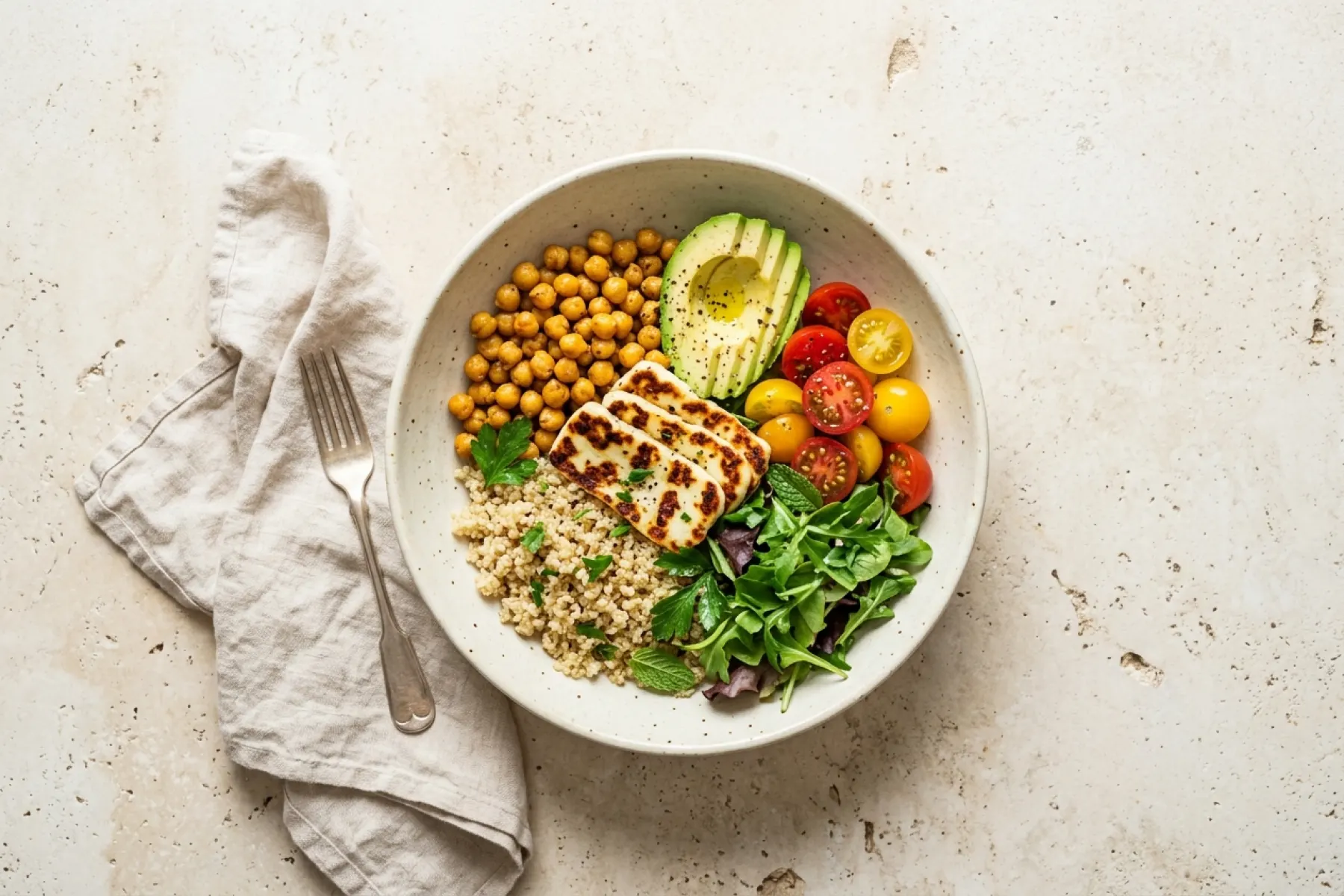
Chickpea & Halloumi Salad

200 g chickpeas with 60 g griddled halloumi, cucumber, tomato and a lemon-olive oil dressing.

540 kcal P 26g C 48g F 24g
Dinner 35 min

Mushroom & Spinach Risotto

70 g dry risotto rice cooked slowly with mushrooms, spinach, garlic and stock, finished with 20 g parmesan.

580 kcal P 18g C 84g F 16g
Snack 1 min

Apple & Almonds

One apple with 25 g almonds.

250 kcal P 6g C 25g F 14g

Note: A risotto looks like a project but is mostly stirring — make extra rice earlier in the week if you want to speed it up.

2

Day 2

Tuesday
Egg day
1,850 kcal 84g protein 226g net carbs 65g fat
Breakfast 10 min

Avocado & Egg on Toast

Two poached eggs and half a mashed avocado on two slices of wholegrain toast, with chilli flakes.

470 kcal P 22g C 42g F 24g
Lunch 30 min

Lentil & Vegetable Soup with Sourdough

A deep bowl of lentil, carrot and celery soup with two slices of sourdough and a drizzle of olive oil.

520 kcal P 24g C 74g F 13g
Dinner 20 min

Bean & Cheese Burrito Bowl

Black beans, peppers and onion with 150 g cooked rice, 30 g cheese, salsa and guacamole.

620 kcal P 24g C 84g F 20g
Snack 2 min

Greek Yogurt with Honey

150 g Greek yogurt with a drizzle of honey and a few walnuts.

240 kcal P 14g C 26g F 8g

Note: Cook extra black beans and rice — both reappear later in the week.

3

Day 3

Wednesday
Indian-inspired
1,860 kcal 79g protein 214g net carbs 68g fat
Breakfast 3 min

Greek Yogurt, Granola & Berries

200 g Greek yogurt with 40 g granola and 100 g mixed berries.

440 kcal P 22g C 54g F 13g
Lunch 8 min

Leftover Bean Bowl

Tuesday’s black beans and rice with fresh vegetables and a fried egg on top.

540 kcal P 24g C 62g F 18g
Dinner 30 min

Paneer Tikka Masala with Rice

150 g paneer in a tomato-based curry sauce with peppers and spinach, over 150 g cooked rice.

640 kcal P 28g C 66g F 26g
Snack 2 min

Mango & Cashews

A small sliced mango with 20 g cashews.

240 kcal P 5g C 32g F 11g

Note: Paneer holds its shape and does not need marinating like tofu — genuinely one of the easiest proteins on this whole plan.

4

Day 4

Thursday
Tofu day
1,830 kcal 81g protein 238g net carbs 57g fat
Breakfast 4 min + overnight

Overnight Oats with Apple & Cinnamon

60 g oats soaked in 200 ml milk overnight with grated apple, cinnamon and 10 g mixed seeds.

450 kcal P 17g C 68g F 12g
Lunch 12 min

Falafel & Hummus Pitta

Four falafel in a wholemeal pitta with 40 g hummus, shredded lettuce, tomato and a squeeze of lemon.

560 kcal P 20g C 68g F 22g
Dinner 25 min

Crispy Tofu Stir Fry with Noodles

180 g firm tofu, cubed and pan-fried until crisp, with peppers and pak choi through 80 g dry noodles.

620 kcal P 26g C 78g F 20g
Snack 2 min

Cottage Cheese & Pineapple

150 g cottage cheese with 100 g pineapple chunks.

200 kcal P 18g C 24g F 3g

Note: Press the tofu for 15 minutes before cooking — removing the extra water is what actually gets it crispy, not the amount of oil.

5

Day 5

Friday
Fast and easy
1,860 kcal 76g protein 238g net carbs 63g fat
Breakfast 6 min

Smoothie Bowl

200 g yogurt blended with a banana and 100 g frozen berries, topped with 30 g oats and 10 g seeds.

470 kcal P 22g C 66g F 12g
Lunch 12 min in a microwave

Jacket Potato with Beans & Cheese

A 300 g baked potato with baked beans, 30 g cheese and a side salad.

530 kcal P 22g C 84g F 12g
Dinner 35 min

Homemade Vegetable Pizza

A wholemeal base with tomato, 60 g mozzarella, mushrooms, peppers and olives, finished with rocket.

610 kcal P 26g C 74g F 20g
Snack 1 min

Dark Chocolate & Brazil Nuts

20 g of 70% dark chocolate with 20 g brazil nuts.

250 kcal P 6g C 14g F 19g

Note: Friday is the day most plans fall over. Chocolate is on the menu because it is meant to be — not a treat you are talked out of.

6

Day 6

Saturday
Weekend brunch
1,940 kcal 84g protein 222g net carbs 74g fat
Breakfast 18 min

Vegetarian Cooked Breakfast

Two eggs, grilled halloumi, baked beans, mushrooms and grilled tomato with one slice of toast.

520 kcal P 30g C 40g F 24g
Lunch 30 min

Roasted Vegetable & Feta Grain Bowl

Roasted courgette, pepper and sweet potato over 150 g cooked bulgur with 40 g feta and a tahini dressing.

580 kcal P 20g C 76g F 22g
Dinner 30 min

Veggie Burger with Sweet Potato Wedges

A bean or chickpea-based veggie burger in a bun with salad, 20 g cheese and baked sweet potato wedges.

620 kcal P 22g C 82g F 20g
Snack 2 min

Greek Yogurt, Honey & Pistachios

150 g Greek yogurt with honey and 10 g chopped pistachios.

220 kcal P 12g C 24g F 8g

Note: Check the label on the veggie burger — some brands run surprisingly high in sodium, and a bean-based one usually beats a heavily processed patty.

7

Day 7

Sunday
Cook for the week
1,980 kcal 81g protein 252g net carbs 69g fat
Breakfast 20 min

Pancakes with Berries & Yogurt

Two proper pancakes with 100 g berries, 100 g Greek yogurt and a thin pour of maple syrup.

470 kcal P 18g C 66g F 14g
Lunch 30 min

Halloumi & Chickpea Grain Bowl

60 g griddled halloumi and 100 g chickpeas over 150 g cooked bulgur, with roasted vegetables and tahini dressing.

600 kcal P 26g C 70g F 24g
Dinner 35 min

Vegetable & Bean Chilli with Rice

Mixed beans, peppers, courgette and tomato with chipotle, over 150 g cooked rice, with 30 g cheese and sour cream.

610 kcal P 24g C 88g F 16g
Snack 2 min

Cheese, Oatcakes & Grapes

30 g cheddar with four oatcakes and a small bunch of grapes.

300 kcal P 13g C 28g F 15g

Note: Make a double batch of chilli — it freezes well and covers a fast dinner the week after.

Week at a glance
1,881 kcal · 230.7g net carbs, averaged across 7 days
Build mine

The grocery list

One person, seven days. An ordinary supermarket shop — tofu, paneer and falafel are all standard chilled-aisle items now, nothing needs ordering online.

0 of 49 ticked — ticks are saved in this browser.

Protein & eggs

6

Dairy & chilled

9

Produce

15

Pantry & freezer

19

If the plan does not fit you

No fixed plan survives contact with a real person’s allergies, budget and schedule. These are the swaps that keep the macros intact.

Vegan

Swap eggs for tofu scramble or extra beans, dairy for plant-based yogurt and cheese, and check the veggie burger and pizza base for dairy. Our vegan meal plan is built fully plant-based from the start.

You want more protein

Add a scoop of plain Greek yogurt or an extra egg to two meals a day — that alone pushes the daily total past 100 g without changing the structure.

Gluten free

Rice, quinoa, potato, corn tortillas and gluten-free oats cover most starches here; the pizza base, wraps and noodles are the main items needing a genuine substitute.

You want faster weight loss

Trim starch portions by a quarter and drop the daily snack — that lands close to 1,550 calories on the same structure.

Nut allergy

Drop the almonds, cashews, walnuts, brazil nuts and pistachios from snacks and replace with seeds, and double-check the granola and any pesto for traces.

Cooking for a family

Every dinner here scales by multiplying quantities — the pizza and burritos in particular work well with everyone building their own portion.

What to eat, what to skip

Eat freely

  • Eggs and dairy, full-fat or reduced-fat as you prefer
  • Legumes — chickpeas, beans, lentils — in real portions, most days
  • Tofu and paneer as regular protein sources, not occasional ones
  • Wholegrains: oats, brown rice, wholemeal bread, bulgur
  • Vegetables at every lunch and dinner
  • Two or three pieces of fruit a day
  • Olive oil, nuts, seeds and avocado as the main fats
  • Cheese, chocolate and bread in the portions written here
  • Falafel, veggie burgers and other whole-food vegetarian staples

Leave these out

  • Relying on cheese as the only protein source at every meal
  • Ultra-processed meat-substitute products as a daily habit
  • Sugary drinks and fruit juice in place of water
  • Skipping legumes because they take longer to cook — tinned versions are just as good
  • Very large portions of pasta or bread with little else on the plate
  • Assuming "vegetarian" on a menu automatically means balanced — a cheese-only sandwich is not a complete meal
  • Restarting on Monday instead of continuing from the next meal

The three nutrients worth actually checking

A well-planned vegetarian diet has no inherent gaps, but these are the three areas worth a little attention if you are new to it.

Iron
Pair with vitamin C
Lentils and beans with peppers, tomato or citrus improves absorption significantly
B12
From eggs and dairy
Covered here since this plan includes both — a concern only for fully plant-based eating
Protein spread
Across the day
A little at every meal works better than loading it all into dinner

Six things that make this week easier

Buy legumes tinned, not just dried

A tin of chickpeas or beans is ready in seconds and just as nutritious as soaking dried ones — the extra effort of dried legumes buys you almost nothing for a weekday dinner.

Press tofu properly

Fifteen minutes under a weight, or a cheap tofu press, is the entire difference between crispy pan-fried cubes and something soft and forgettable.

Build the plate the same way regardless

Half vegetables, a quarter protein, a quarter starch works exactly as well without meat — the shape of the meal matters more than any single ingredient.

Cook once, eat twice, deliberately

The risotto rice, black beans and chilli all reappear later in the week — batching the first time is what makes this plan realistic to actually cook.

Keep a jar of tahini in the cupboard

It turns into a dressing with just lemon and water in under a minute, and appears across several meals here doing exactly that.

Free generator

This plan is built for an average person. You are not one.

The menu above assumes about 1,881 calories a day and no allergies. Give us your height, weight, goal and the foods you refuse to eat, and the generator rebuilds this entire week around your actual numbers — recipes, macros and a fresh grocery list included.

No signup. No card. Takes about 30 seconds.

Questions people ask about this plan

Can you get enough protein on a vegetarian diet?

Yes, easily. This plan reaches 86 g a day from eggs, dairy, legumes and tofu alone, which is above the RDA for most adults and close to what a typical meat-eater consumes without trying.

Will I lose weight on a vegetarian meal plan?

It depends on whether 1,830 calories sits below your maintenance. Use the calorie calculator to find your number, then adjust portions rather than assuming vegetarian automatically means weight loss.

Is this plan suitable for beginners going vegetarian?

Yes, that is exactly who it is built for — nothing here requires unusual ingredients or cooking techniques, and every dish is one you could find on a normal restaurant menu.

What is the difference between this and the vegan plan?

This plan includes eggs, dairy and cheese throughout; the vegan meal plan removes all animal products entirely and is built from different protein sources from the ground up.

Do vegetarians need to worry about B12?

Not on this specific plan — B12 comes reliably from eggs and dairy, both of which appear daily here. It only becomes a genuine concern on a fully plant-based diet.

Is tofu actually healthy?

Yes. It is a complete protein, low in saturated fat, and the concerns some people raise about soy and hormones are not supported by the current evidence at normal dietary intakes.

Can I make this plan higher protein?

Easily — add an extra egg or 150 g of Greek yogurt to two meals a day, which pushes the total past 100 g without restructuring anything.

What if I still occasionally eat meat or fish?

This plan works fine as a flexitarian base — follow it as written most days and swap in fish or chicken on the days you want to, using the same portion sizes as the tofu or paneer meals.

How much fibre is in this plan?

Around 32–35 g a day, well above the typical 18 g most adults eat, driven by the legumes, wholegrains and vegetable volume throughout the week.

What do I do after seven days?

Repeat it, rotating the vegetables and swapping paneer for tofu or halloumi week to week. If you want a version built around your own calorie target and preferences, the meal plan generator will build one in about thirty seconds.
Medical disclaimer. This plan is general nutrition information, not medical advice. Calorie and macro figures are estimates for the portions described and will vary with brands, cuts and cooking method. Talk to a doctor or registered dietitian before starting any new diet, especially if you are pregnant, breastfeeding, managing a medical condition, or taking medication that needs dosing around food.