Weight Loss Free

7-Day Calorie Deficit Meal Plan

Around 1,589 calories a day, engineered so it does not feel like 1,589 — high protein, high fibre and a lot of food volume, because staying in a deficit is the only part that is actually hard.

~1,589
Daily calories
~127 g
Protein/day
0.5 kg/wk
Typical loss
10-35 min
Cook time

What this plan actually does

A calorie deficit is the only mechanism by which anyone loses fat. Every diet that works — keto, fasting, low fat, carnivore, Weight Watchers — works by producing one, usually without saying so. The differences between them are differences in how easy they make the deficit to hold, not in whether the deficit is required.

So the useful question is not which diet burns more fat. It is: what do I eat so that eating less does not feel unbearable? The answer is consistent across the research — protein, fibre and water-heavy food. Those three make food fill your stomach and switch off hunger signals for the fewest calories.

This plan is built on that principle rather than on a number. It averages 1,589 calories, but the real content is the shape: 127 g of protein, over 30 g of fibre, and meals that arrive as large plates rather than small ones. Your own target may be higher or lower, and the section below shows how to size it.

A good fit if

  • Anyone who has been hungry on previous diets and quit because of it
  • People who want to lose fat without banning any food group
  • Anyone who finds small portions psychologically difficult
  • People coming off a crash diet who need something sustainable
  • Anyone who wants to keep training while dieting

Talk to a doctor first if

  • Anyone with a current or past eating disorder — calorie targets can be a direct trigger
  • Pregnancy or breastfeeding, where deficits are not appropriate
  • Children and teenagers, who should not be calorie restricted without medical input
  • Anyone already at a low body weight or BMI under 18.5
  • People on medication that requires consistent carbohydrate intake, without medical advice

The rules behind the plan

Four principles decide every meal below. Understand these and you can improvise for the rest of your life instead of following someone else’s menu forever.

1

Work out your own number first

Find your maintenance calories, then subtract 15–20%. For most adults that lands between 1,500 and 2,200. The 1,589 here suits a smaller or less active adult; if you are taller, heavier or more active, scale the portions up rather than starving on a number written for someone else. The calorie calculator does the arithmetic.

2

Protein and fibre do the appetite work

At 127 g of protein and over 30 g of fibre, this plan hits both satiety levers hard. Protein triggers the fullness hormones most strongly and costs the most energy to digest; fibre adds bulk and slows the stomach emptying. Together they are worth more than willpower.

3

Volume is chosen over density at every meal

300 g of potato and 100 g of chips carry similar calories. One fills a plate and your stomach; the other does not. Every swap in this plan runs in that direction — big salads, whole potatoes, beans, soups, fruit rather than juice.

4

Slow is the feature, not the bug

Roughly 0.5 kg a week, or about 1% of bodyweight at most. Faster than that and you lose a much higher share as muscle, you get hungrier, and the odds of regaining it climb. The aim is to arrive at the target weight still able to eat a normal amount.

The full 7-day plan

Every meal, with calories and macros per portion. Daily totals are calculated from the meals themselves.

1

Day 1

Monday
Big plates
1,600 kcal 134g protein 159g net carbs 45g fat
Breakfast 12 min

Egg & Vegetable Scramble on Toast

One whole egg plus four whites scrambled with spinach, mushrooms and tomato, on two slices of wholegrain toast.

380 kcal P 28g C 38g F 12g
Lunch 20 min

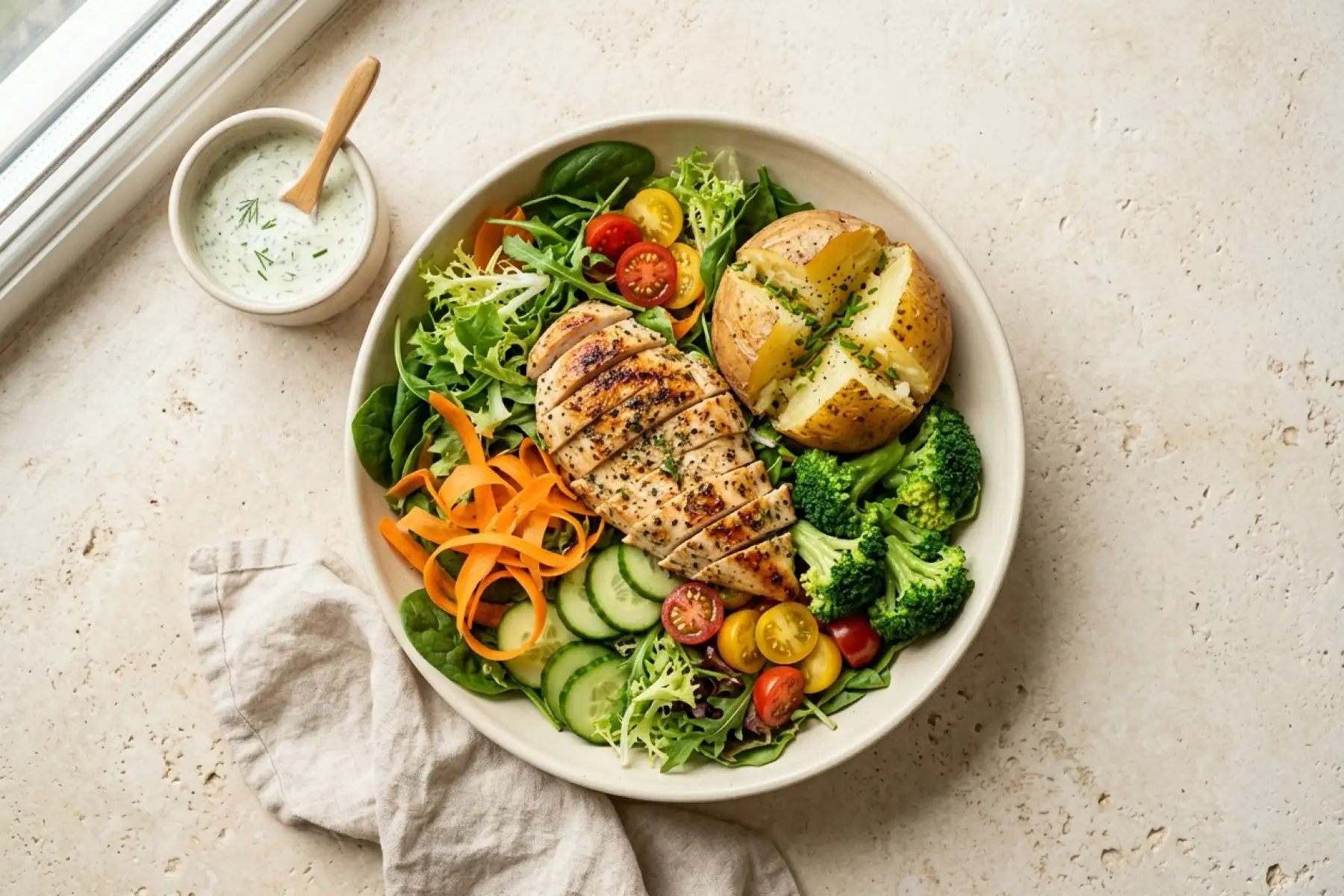
Big Chicken Salad with New Potatoes

130 g chicken with 200 g new potatoes and a genuinely large salad — leaves, cucumber, tomato, pepper, red onion — with a quarter avocado and a yogurt-mustard dressing.

460 kcal P 38g C 42g F 16g
Dinner 30 min

Turkey Chilli with Rice

130 g turkey mince with kidney beans, peppers and chopped tomato, over 120 g cooked rice, with coriander and lime.

520 kcal P 43g C 55g F 13g
Snack 2 min

Greek Yogurt, Berries & Honey

250 g fat-free Greek yogurt with 100 g berries and a teaspoon of honey.

240 kcal P 25g C 24g F 4g

Note: Notice the salad size. A deficit plan that serves small plates fails in week two — this one serves large plates of low-calorie food instead.

2

Day 2

Tuesday
Lightest day
1,520 kcal 128g protein 152g net carbs 41g fat
Breakfast 4 min + overnight

Overnight Oats with Yogurt & Berries

40 g oats soaked overnight with 150 g fat-free Greek yogurt, 100 g berries and 10 g mixed seeds.

370 kcal P 24g C 46g F 9g
Lunch 10 min

Tuna & White Bean Salad Jar

A tin of tuna with 100 g cannellini beans, cucumber, tomato and red onion, dressed with a tablespoon of olive oil and lemon.

430 kcal P 38g C 32g F 16g
Dinner 25 min

Baked Cod with Potatoes & Broccoli

180 g cod baked with lemon and a knob of butter, with 250 g boiled potatoes and a large pile of broccoli.

480 kcal P 42g C 50g F 11g
Snack 2 min

Cottage Cheese & Apple

200 g cottage cheese with a sliced apple and cinnamon.

240 kcal P 24g C 24g F 5g

Note: The lightest day at about 1,520. White fish is the single most protein-dense, lowest-calorie food in the plan — use it when you want room elsewhere.

3

Day 3

Wednesday
Cook once, eat twice
1,560 kcal 130g protein 152g net carbs 41g fat
Breakfast 12 min

Vegetable Omelette with Sourdough

Three eggs with peppers, spinach and spring onion, with one slice of toasted sourdough.

390 kcal P 26g C 26g F 19g
Lunch 25 min

Chicken & Roasted Vegetable Couscous

130 g chicken with 120 g cooked couscous, roasted courgette, pepper and red onion, with parsley and lemon.

450 kcal P 40g C 48g F 9g
Dinner 18 min

Lean Beef Stir Fry with Noodles

130 g lean beef strips with a whole bag of stir fry vegetables through 60 g dry noodles, soy and ginger. Cook a double batch.

530 kcal P 42g C 60g F 12g
Snack 2 min

Skyr with Honey & Cinnamon

200 g plain skyr with a teaspoon of honey and cinnamon.

190 kcal P 22g C 18g F 1g

Note: Use a whole bag of stir fry vegetables, not half. It adds 60 calories and roughly doubles the volume on the plate.

4

Day 4

Thursday
Lowest effort
1,610 kcal 127g protein 177g net carbs 42g fat
Breakfast 3 min

Protein Smoothie with Oats

One scoop of whey blended with 250 ml skimmed milk, a banana and 25 g oats. Drink it slowly — drunk calories fill you less.

390 kcal P 34g C 52g F 5g
Lunch 6 min

Leftover Beef Stir Fry

Yesterday’s stir fry reheated with extra pak choi thrown in at the end.

460 kcal P 38g C 52g F 10g
Dinner 35 min

Chicken Traybake with Sweet Potato

150 g chicken breast roasted with 250 g sweet potato wedges and green beans in a tablespoon of olive oil and paprika.

520 kcal P 42g C 55g F 13g
Snack 4 min

Carrots, Hummus & a Boiled Egg

Carrot and pepper sticks with 40 g hummus, plus one boiled egg.

240 kcal P 13g C 18g F 14g

Note: The smoothie is the one liquid meal in the plan. Liquid calories fill you less than solid ones, which is why there is only one.

5

Day 5

Friday
Fewest dishes
1,600 kcal 123g protein 182g net carbs 40g fat
Breakfast 3 min

Greek Yogurt Bowl with Granola

200 g fat-free Greek yogurt with 25 g granola, 100 g berries and 10 g flaked almonds.

400 kcal P 26g C 42g F 12g
Lunch 14 min

Jacket Potato with Cottage Cheese

A 300 g potato microwaved then crisped, with 150 g cottage cheese, chives and a very large side salad.

440 kcal P 30g C 60g F 8g
Dinner 30 min

Prawn & Vegetable Paella

200 g prawns with 70 g dry rice, peppers, peas and paprika, cooked in one pan with a tablespoon of olive oil.

520 kcal P 44g C 60g F 12g
Snack 3 min

Cocoa Skyr with Dark Chocolate

200 g skyr whipped with unsweetened cocoa and sweetener, with 15 g of 85% chocolate on the side.

240 kcal P 23g C 20g F 8g

Note: A jacket potato is one of the most filling foods per calorie ever measured. It is on this plan for that reason, not because it is fashionable.

6

Day 6

Saturday
Social-proof
1,590 kcal 128g protein 160g net carbs 43g fat
Breakfast 20 min

Baked Eggs with Feta & Sourdough

Two eggs baked in spiced tomato and pepper with 20 g feta, and one slice of sourdough to mop.

370 kcal P 24g C 30g F 17g
Lunch 15 min

Chicken Pitta with Tzatziki

130 g grilled chicken in a wholemeal pitta with tzatziki, shredded lettuce, tomato and red onion.

450 kcal P 42g C 46g F 9g
Dinner 30 min

Pork Loin, Crushed Potatoes & Cabbage

150 g pork loin with 250 g potatoes crushed with mustard, and cabbage braised in a little butter.

520 kcal P 44g C 50g F 14g
Snack 4 min

Popcorn & Greek Yogurt

20 g air-popped popcorn with 150 g Greek yogurt. Popcorn is the highest-volume snack per calorie in the supermarket.

250 kcal P 18g C 34g F 3g

Note: Eating out tonight? Order any grilled protein with potatoes or rice and vegetables, skip the bread and the second drink, and you have landed on this day.

7

Day 7

Sunday
Prep day
1,640 kcal 118g protein 178g net carbs 51g fat
Breakfast 15 min

Eggs, Beans & Mushrooms on Toast

Two scrambled eggs with 150 g baked beans and grilled mushrooms, on one slice of wholegrain toast.

400 kcal P 26g C 44g F 13g
Lunch 15 min

Roast Chicken & Quinoa Salad

140 g roast chicken over 100 g cooked quinoa with a large salad, dressed in olive oil and red wine vinegar.

460 kcal P 42g C 36g F 16g
Dinner 35 min

Lentil & Vegetable Curry with Rice

150 g cooked lentils with cauliflower, spinach and light coconut milk, over 120 g cooked rice.

520 kcal P 24g C 82g F 12g
Snack 2 min

Cottage Cheese, Pineapple & Almonds

200 g cottage cheese with 80 g pineapple and 10 g almonds.

260 kcal P 26g C 16g F 10g

Note: While the curry simmers, boil six eggs, roast a tray of chicken and soak Tuesday’s oats. Forty minutes now removes most of next week’s decisions.

Week at a glance
1,589 kcal · 165.7g net carbs, averaged across 7 days
Build mine

The grocery list

One person, seven days. Frozen vegetables, tinned beans and own-brand yogurt are doing most of the work here — a deficit plan does not need to be an expensive one.

0 of 59 ticked — ticks are saved in this browser.

Meat, fish & eggs

10

Dairy & chilled

9

Produce

20

Pantry & freezer

20

If the plan does not fit you

No fixed plan survives contact with a real person’s allergies, budget and schedule. These are the swaps that keep the macros intact.

You need 1,800-2,000 calories

Add a second slice of toast at breakfast, raise each starch portion by 50 g, and add 20 g of nuts. Keep the protein and the vegetable volume exactly as they are.

You need closer to 1,400

Drop the daily snack and swap the smoothie for two boiled eggs and fruit. Do not go lower than this without medical supervision — below 1,200 it is hard to hit basic nutrient needs.

Vegetarian

Tofu, tempeh, edamame, eggs, cottage cheese, Greek yogurt and the lentils already here. Protein lands nearer 100 g, so lean a little harder on the dairy to keep fullness up.

You are always hungry at night

Move the snack to after dinner and make breakfast smaller. Total calories are what matter, and there is no metabolic penalty for eating later — only a behavioural one if it triggers more eating.

No time to cook at all

Live on the repeatable ones: jacket potato with cottage cheese, tuna and bean jars, Greek yogurt bowls, and frozen stir fry bags. Four meals on rotation beats an ambitious plan you abandon.

You are also lifting weights

Raise protein to about 150 g by adding 200 g of Greek yogurt or 120 g of chicken, and take the calories back off the fat. Muscle retention improves markedly at that intake.

What to eat, what to skip

Eat freely

  • Chicken breast, turkey, lean pork, 5% mince
  • White fish and prawns — the best protein-per-calorie there is
  • Eggs and egg whites
  • Fat-free Greek yogurt, skyr, cottage cheese
  • Potatoes, sweet potatoes and rice, weighed
  • Beans, lentils and chickpeas
  • Every vegetable, in genuinely large quantities
  • Whole fruit, especially berries and apples
  • Oats, wholegrain bread, couscous, quinoa
  • Popcorn, which is enormous for its calories
  • Zero-calorie drinks, tea, coffee, sparkling water

Leave these out

  • Fruit juice, smoothies you did not make, and sugary drinks
  • Oil poured by eye rather than measured — the commonest hidden 200 calories
  • Alcohol, which adds calories and lowers restraint at the same time
  • Nuts and cheese eaten straight from the bag or block
  • Dried fruit, which is four times the calories of fresh for the same volume
  • Creamy dressings and mayonnaise on salads you built to be light
  • Very low calorie shake diets that skip the habits entirely
  • “Healthy” granola and bars, which are frequently 500 calories per serve
  • Finishing what the children left
  • Skipping meals to save calories, then eating them all after 9pm

Where the calories actually hide

People do not usually break a diet with a pizza. They break it with four things nobody counts, which together run 400–600 calories a day and make a real deficit look like a stall.

Cooking oil
~120 kcal/tbsp
Measure it; a free pour is often three tablespoons
Drinks
150-250 kcal
Juice, lattes, beer and wine count in full
Tasting
100-200 kcal
Bites while cooking and clearing plates add up daily
Weekends
+1,500/week
Two loose days can erase five disciplined ones

Six things that make this week easier

Set the target from your numbers

Maintenance minus 15–20%, not a round number from the internet. Too aggressive a deficit costs muscle, energy and adherence, and it is the single most common self-inflicted mistake.

Weigh yourself daily, judge weekly

Daily weight swings by up to 2 kg on food, salt and hormones. Take the seven-day average and compare it to last week’s average. Single readings will make you quit something that is working.

Fill half the plate before anything else

Vegetables first, then protein, then starch in the space left. Done in that order you physically cannot overload the calorie-dense part of the meal.

Drink before you decide you are hungry

Thirst and mild hunger feel nearly identical. A glass of water and ten minutes resolves a surprising share of unplanned snacking.

Lift something twice a week

Resistance training is what tells your body to keep muscle while losing fat. Without it a larger share of the loss is lean mass, and the weight comes back more easily.

Plan the weekend on Wednesday

Five disciplined days and two unplanned ones nets out to no deficit at all. Decide in advance what Saturday looks like, while you are not hungry.

Free generator

This plan is built for an average person. You are not one.

The menu above assumes about 1,589 calories a day and no allergies. Give us your height, weight, goal and the foods you refuse to eat, and the generator rebuilds this entire week around your actual numbers — recipes, macros and a fresh grocery list included.

No signup. No card. Takes about 30 seconds.

Questions people ask about this plan

How big should my calorie deficit be?

Fifteen to twenty percent below maintenance, which for most adults is 300–500 calories a day and gives roughly 0.5 kg of loss a week. Larger deficits do work faster, but they cost more muscle, make hunger and fatigue much worse, and have a far higher dropout rate. A cap of about 1% of bodyweight lost per week is a sensible ceiling.

How do I calculate my maintenance calories?

Estimate your BMR with the Mifflin-St Jeor equation, then multiply by an activity factor from 1.2 for sedentary up to 1.9 for very active. That gives your TDEE, or maintenance. The calorie calculator runs it for you. Treat the result as a starting estimate: track your weight for two weeks and adjust from what actually happens.

Is 1,589 calories too low for me?

Possibly. It suits a smaller or less active adult. If you are tall, heavy, male, or training several times a week, it is likely too aggressive and you should scale the portions up using the swaps above. As a floor, most guidance puts 1,200 calories for women and 1,500 for men as the point below which hitting nutrient needs becomes genuinely difficult.

Why am I not losing weight in a calorie deficit?

Almost always one of three things. The deficit is smaller than you think, because oil, drinks, tasting while cooking and weekends are not being counted. Or water retention is masking fat loss — common after a hard session or a salty meal, and it can hide two weeks of progress. Or it has not been long enough: four weeks of a flat average is a stall, four days is not.

Should I eat back the calories I burn exercising?

Partly, and only from a conservative estimate. Fitness trackers routinely overestimate calorie burn by 30–50%, so eating back the number on the watch can erase the whole deficit. A reasonable approach is to set your target using an activity multiplier that already includes your training, then not adjust day to day.

Do I have to count calories to be in a deficit?

No, but you have to control portions somehow. This plan does it structurally — fixed portions, high protein, high volume — so the deficit happens without a tracking app. Counting for two weeks is still worth doing once, purely to calibrate your estimates, which are almost certainly low on fats and high on vegetables.

Will I lose muscle in a calorie deficit?

Some, unless you actively prevent it. The two things that protect muscle are high protein — which is why this plan runs 127 g — and resistance training two or three times a week. With both, most of what you lose is fat. With neither, as much as a quarter of the loss can be lean tissue.

Is it better to eat fewer, bigger meals?

It makes no difference to fat loss; total daily calories are what count. Meal frequency is purely a preference question. Some people find three large meals far more satisfying than five small ones, and others are the opposite. This plan uses four because it suits most schedules, but collapse it into three if that suits you better.

How long should I stay in a deficit?

Eight to sixteen weeks, then eat at maintenance for a few weeks before continuing if you have more to lose. Long uninterrupted deficits wear down adherence, training quality and often mood. Planned maintenance breaks make the whole process more sustainable and do not meaningfully slow the result.

What happens when I reach my goal weight?

Add calories back gradually — roughly 100 a week until your weight holds steady — rather than stopping the plan on a Friday. Keep the protein, keep the vegetable volume, keep the training. If you want a maintenance version of this exact plan built around your new weight, the meal plan generator will produce one in about thirty seconds.
Medical disclaimer. This plan is general nutrition information, not medical advice. Calorie and macro figures are estimates for the portions described and will vary with brands, cuts and cooking method. Talk to a doctor or registered dietitian before starting any new diet, especially if you are pregnant, breastfeeding, managing a medical condition, or taking medication that needs dosing around food.