Mediterranean Free

7-Day Mediterranean Diet Meal Plan

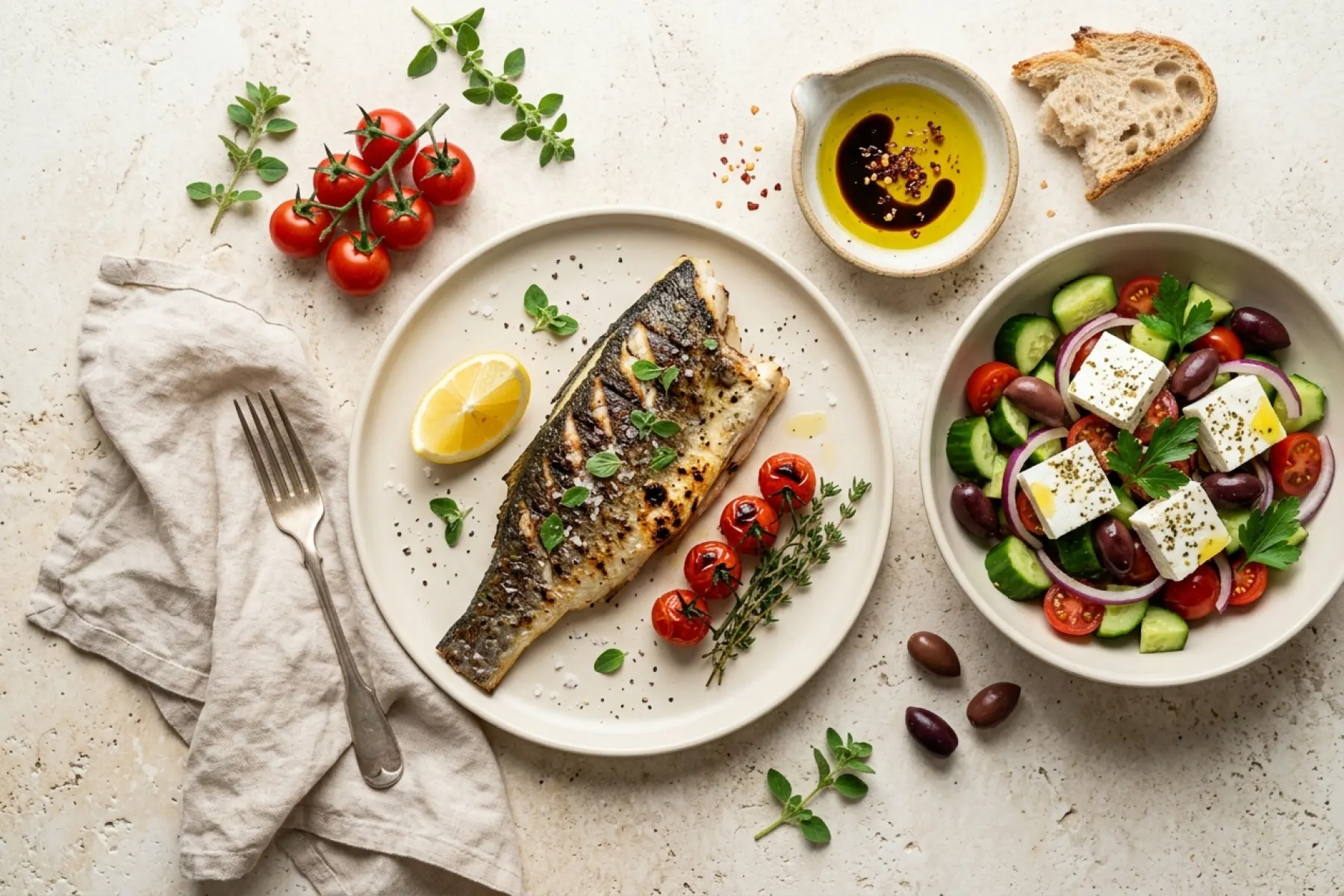
Olive oil, fish, legumes and vegetables at nearly every meal — the eating pattern with the deepest evidence behind it for a long, healthy life, built into a normal week.

~1,860
Daily calories
~88 g
Protein/day
~78 g
Fat/day
10-40 min
Cook time

What this plan actually does

The Mediterranean pattern is not a diet in the restrictive sense — nobody counted calories on Crete in the 1960s, which is where much of the original research comes from. It is a way of building meals that repeats across the whole region: olive oil instead of butter, fish and legumes ahead of red meat, vegetables at nearly every plate, and bread that shows up alongside food rather than instead of it.

What sets it apart from most eating patterns on this site is fat quantity: roughly 38% of calories here come from fat, well above what a typical "low fat" plan allows, almost all of it from olive oil, nuts, seeds and oily fish rather than butter or fried food. Decades of population research, including the landmark PREDIMED trial, link this exact pattern to lower rates of heart disease, and it is the pattern nutrition guidelines most consistently point to for long-term health.

This plan is not vegetarian and not low-carb — there is chicken, a little red meat once, plenty of pasta and bread. What is consistent is the ratio: plants and legumes doing most of the work, fish appearing twice, red meat appearing once, and olive oil replacing almost every other added fat.

A good fit if

  • Anyone prioritising long-term heart and metabolic health over a fast scale change
  • People who already enjoy fish, vegetables, olive oil and legumes
  • Anyone who found low-fat diets left them hungry and unsatisfied
  • A sustainable pattern to follow for years, not weeks
  • People with a family history of cardiovascular disease

Talk to a doctor first if

  • Anyone needing rapid, aggressive weight loss on a tight timeline
  • Fish or shellfish allergies, without significant substitution
  • Very low-fat therapeutic diets prescribed for specific conditions
  • People uncomfortable with meals built around olive oil quantities that feel generous
  • Athletes needing a much higher protein target than 88 g a day

The rules behind the plan

Four principles decide every meal below. Understand these and you can improvise for the rest of your life instead of following someone else’s menu forever.

1

Olive oil replaces almost every other fat

Butter, most other cooking oils and most spreads are gone. Extra virgin olive oil is used for cooking, dressing and even finishing dishes at the table — it is the single fat this pattern is built around.

2

Fish and legumes outrank red meat

Oily fish appears twice this week, legumes several times, and red meat exactly once. That ordering — not total exclusion — is the actual Mediterranean pattern, and it is what the strongest research is built on.

3

Vegetables and herbs are not a side dish

Tomatoes, greens, peppers and herbs sit inside most dishes here rather than beside them, which is a large part of why the pattern delivers so much fibre without ever feeling like "diet food".

4

Bread and wine appear, in normal amounts

Neither is banned. A slice of bread with a meal and a small glass of wine with dinner both fit the traditional pattern — what changes is portion, not presence.

The full 7-day plan

Every meal, with calories and macros per portion. Daily totals are calculated from the meals themselves.

1

Day 1

Monday
Greek-style
1,570 kcal 79g protein 112g net carbs 89g fat
Breakfast 3 min

Greek Yogurt with Honey, Walnuts & Figs

200 g Greek yogurt with a drizzle of honey, 15 g walnuts and two chopped fresh or dried figs.

420 kcal P 20g C 42g F 18g
Lunch 10 min

Greek Salad with Chickpeas

Cucumber, tomato, red onion, olives and 40 g feta with 200 g chickpeas, dressed generously with olive oil and oregano.

480 kcal P 18g C 40g F 28g
Dinner 30 min

Baked Sea Bass with Roasted Vegetables

160 g sea bass or white fish baked with lemon, over roasted courgette, peppers and red onion in olive oil.

480 kcal P 36g C 24g F 26g
Snack 1 min

Handful of Mixed Olives & Almonds

10 olives with 20 g almonds.

190 kcal P 5g C 6g F 17g

Note: Make extra chickpeas — they reappear twice more this week.

2

Day 2

Tuesday
Legume day
1,650 kcal 82g protein 174g net carbs 65g fat
Breakfast 10 min

Tomato & Olive Oil on Toast

Two slices of wholegrain toast rubbed with garlic, topped with crushed ripe tomato, olive oil and a boiled egg on the side.

400 kcal P 16g C 42g F 18g
Lunch 35 min

Lentil & Vegetable Soup

A deep bowl of lentil, carrot, celery and tomato soup finished with a swirl of olive oil, with a slice of crusty bread.

480 kcal P 22g C 62g F 14g
Dinner 40 min

Lemon & Oregano Chicken with Potatoes

150 g chicken thigh roasted with 200 g potatoes, lemon, garlic and oregano in olive oil.

560 kcal P 38g C 46g F 22g
Snack 1 min

An Orange & a Small Handful of Pistachios

One orange with 20 g pistachios.

210 kcal P 6g C 24g F 11g

Note: This is a fully meat-free lunch and nobody would call it a compromise — that is the standard to aim for on legume days.

3

Day 3

Wednesday
Pasta night, done properly
1,670 kcal 71g protein 224g net carbs 50g fat
Breakfast 4 min + overnight

Overnight Oats with Almonds & Berries

50 g oats soaked in 200 ml milk overnight with 15 g almonds and 80 g mixed berries.

400 kcal P 15g C 52g F 14g
Lunch 5 min

Leftover Lentil Soup

Tuesday’s lentil soup reheated, with a side of olives and bread.

460 kcal P 20g C 58g F 14g
Dinner 25 min

Pasta with Tomato, White Beans & Spinach

90 g dry wholewheat pasta with a rich tomato sauce, 150 g white beans, wilted spinach, garlic and olive oil, finished with parmesan.

620 kcal P 24g C 90g F 18g
Snack 2 min

Greek Yogurt with Honey

150 g Greek yogurt with a drizzle of honey.

190 kcal P 12g C 24g F 4g

Note: Wholewheat pasta with beans and greens is a genuine Mediterranean staple, not a health-food substitution — dishes almost identical to this appear across southern Italy.

4

Day 4

Thursday
Oily fish, again
1,690 kcal 80g protein 176g net carbs 69g fat
Breakfast 3 min

Greek Yogurt, Granola & Fresh Fruit

200 g Greek yogurt with 35 g granola and a sliced peach or apple.

420 kcal P 20g C 54g F 12g
Lunch 10 min

Chickpea, Tomato & Herb Salad

Remaining chickpeas with tomato, parsley, red onion, lemon juice and a generous pour of olive oil, with a wholemeal pitta.

490 kcal P 18g C 58g F 20g
Dinner 25 min

Grilled Salmon with Bulgur & Greens

150 g salmon grilled with lemon, over 150 g cooked bulgur wheat with sautéed spinach and garlic.

590 kcal P 38g C 48g F 24g
Snack 1 min

Walnuts & a Few Dried Apricots

20 g walnuts with three dried apricots.

190 kcal P 4g C 16g F 13g

Note: Two oily fish meals a week is one of the few nutrition recommendations with genuinely strong evidence behind it — this plan hits it exactly.

5

Day 5

Friday
Red meat, once
1,780 kcal 95g protein 151g net carbs 83g fat
Breakfast 10 min

Eggs with Tomato & Spinach

Two eggs scrambled with cherry tomatoes and spinach in olive oil, with a slice of wholegrain toast.

400 kcal P 20g C 30g F 22g
Lunch 6 min

Leftover Salmon & Bulgur Bowl

Thursday’s salmon flaked cold over bulgur with cucumber, tomato and a lemon-olive oil dressing.

520 kcal P 32g C 44g F 22g
Dinner 30 min

Lamb & Vegetable Skewers with Rice

130 g lamb marinated in lemon, garlic and oregano, skewered with peppers and onion, over 150 g cooked rice.

630 kcal P 38g C 62g F 22g
Snack 1 min

Dark Chocolate & Almonds

20 g of 70% dark chocolate with 15 g almonds.

230 kcal P 5g C 15g F 17g

Note: Red meat sits at exactly once this week — the traditional Mediterranean pattern treats it as an occasional food, not a banned one.

6

Day 6

Saturday
Sharing food
1,720 kcal 73g protein 178g net carbs 70g fat
Breakfast 15 min

Yogurt Pancakes with Honey & Nuts

Two yogurt-based pancakes with a drizzle of honey and 15 g chopped walnuts.

440 kcal P 18g C 56g F 16g
Lunch 10 min

Mezze Plate

Hummus, tzatziki, olives, cherry tomatoes, cucumber, wholemeal pitta and a small piece of grilled halloumi.

560 kcal P 20g C 56g F 28g
Dinner 20 min

Grilled Prawns with Orzo Salad

150 g grilled prawns over 80 g dry orzo cooked and tossed with tomato, cucumber, feta and olive oil.

570 kcal P 34g C 62g F 20g
Snack 1 min

A Small Glass of Red Wine & a Few Olives

One small glass (125 ml) of red wine with a handful of olives — optional, and entirely traditional if you drink.

150 kcal P 1g C 4g F 6g

Note: A mezze-style lunch is built for sharing — put everything on the table and let it stretch across a slow afternoon, which is rather the point.

7

Day 7

Sunday
Slow-cooked
1,690 kcal 93g protein 172g net carbs 63g fat
Breakfast 3 min

Greek Yogurt with Fresh Fruit & Honey

200 g Greek yogurt with a sliced pear, a drizzle of honey and 10 g pumpkin seeds.

400 kcal P 18g C 48g F 12g
Lunch 10 min

White Bean & Tuna Salad

200 g white beans with a tin of tuna, red onion, parsley and a generous olive oil dressing, with bread.

520 kcal P 32g C 54g F 18g
Dinner 70 min (mostly unattended)

Slow-Cooked Chicken & Vegetable Stew

Chicken thighs braised with tomato, white beans, carrots and rosemary, served with crusty bread for dipping.

590 kcal P 40g C 48g F 24g
Snack 1 min

Figs with Walnuts

Two fresh or dried figs with 15 g walnuts.

180 kcal P 3g C 22g F 9g

Note: A slow-cooked Sunday stew is where the pattern shows itself best — olive oil, tomato, beans and herbs, simmered until the kitchen smells like it, then a loaf of bread to mop up what is left.

Week at a glance
1,681 kcal · 169.6g net carbs, averaged across 7 days
Build mine

The grocery list

One person, seven days. Expect one or two Mediterranean-specific items — a jar of olives, feta, orzo — that a typical UK/US supermarket still stocks in the regular aisles.

0 of 43 ticked — ticks are saved in this browser.

Fish & meat

7

Dairy & chilled

6

Produce & herbs

12

Pantry & freezer

18

If the plan does not fit you

No fixed plan survives contact with a real person’s allergies, budget and schedule. These are the swaps that keep the macros intact.

Pescatarian

Simply drop the lamb on Friday for another fish or a chickpea-based dish — the plan is already 90% seafood, legume and vegetable friendly.

Vegetarian

Replace the fish and lamb with extra legumes, halloumi and eggs. Every lunch already leans this way; dinners need the most adjusting.

You want faster weight loss

Trim the added olive oil slightly and reduce bread and pasta portions by a quarter — the pattern stays intact at a few hundred fewer calories, or try our calorie deficit plan for a bigger cut.

You need more protein

Add a boiled egg or extra 100 g of chicken or fish to lunch most days — the fat-forward base here leaves plenty of calorie room for it.

Shellfish allergy

Replace the Saturday prawns with baked cod or extra chicken, and check any hummus or premade dips for shellfish-derived additives.

You do not drink alcohol

Skip the Saturday wine entirely — it is written in as optional and traditional, not required; swap it for the olives alone or a piece of fruit.

What to eat, what to skip

Eat freely

  • Extra virgin olive oil as the main fat, used generously
  • Fish twice a week, at least one of them oily
  • Legumes — chickpeas, beans, lentils — several times a week
  • Vegetables and fresh herbs at nearly every meal
  • Wholegrains: bulgur, wholewheat pasta, wholegrain bread
  • Nuts and seeds daily, in small handfuls
  • Greek yogurt and moderate cheese, especially feta
  • Fresh fruit most days
  • Red meat occasionally — roughly once a week, not daily
  • A small glass of wine with a meal, if you drink

Leave these out

  • Butter and most refined seed oils as the everyday cooking fat
  • Processed and cured meats as a regular habit
  • Refined white bread and pastries in place of wholegrains
  • Sugary drinks and heavily sweetened desserts
  • Large, frequent portions of red meat
  • Ultra-processed ready meals in place of home-cooked food
  • Treating olive oil as something to measure by the teaspoon — the traditional pattern uses it far more generously than most "healthy eating" advice suggests

Generous fat still needs a calorie ceiling

The evidence behind this pattern is real, but fat is calorie-dense — a truly unmeasured "as much olive oil as you like" approach can push total intake well above maintenance. Keep an eye on these four.

Olive oil
2–3 tbsp/day
Generous but not unlimited — a free pour over several dishes adds up fast
Nuts
A small handful
Around 20 g — easy to eat three times that straight from the bag
Cheese
A measured piece
Feta and halloumi are calorie-dense; 40–60 g is a portion, not a slab
Bread
Alongside, not instead
A slice or two with a meal, not a whole loaf to mop up sauce

Six things that make this week easier

Buy a real extra virgin olive oil

This plan uses enough of it that quality matters — a genuine extra virgin oil tastes noticeably better and is what the research this pattern is based on actually used.

Herbs are not a garnish here

Oregano, parsley and rosemary are used in real quantities throughout the week — they carry a surprising amount of the flavour that lets this pattern use less salt.

Cook for sharing when you can

The mezze-style Saturday lunch and Sunday stew are built to sit in the middle of a table. Eating slowly and socially is as much a part of this pattern as any single ingredient.

Buy fish frozen if fresh is expensive

Frozen salmon, white fish and prawns lose very little nutritionally and make the two fish meals a week far easier to sustain on a budget.

Judge this one over months, not weeks

The strongest evidence behind this pattern is about long-term cardiovascular and metabolic health, not fast weight change — give it real time before deciding whether it is working.

Free generator

This plan is built for an average person. You are not one.

The menu above assumes about 1,681 calories a day and no allergies. Give us your height, weight, goal and the foods you refuse to eat, and the generator rebuilds this entire week around your actual numbers — recipes, macros and a fresh grocery list included.

No signup. No card. Takes about 30 seconds.

Questions people ask about this plan

What makes a meal plan "Mediterranean"?

A consistent pattern rather than a single rule: olive oil as the primary fat, fish and legumes ahead of red meat, vegetables and herbs at most meals, wholegrains over refined ones, and moderate wine and dairy. No single ingredient defines it — the overall ratio does.

Is the Mediterranean diet good for weight loss?

It can be, though it is better evidenced for long-term health than fast weight loss specifically. At around 1,860 calories this version sits at a mild deficit for many adults; portion size, not food choice, is what determines the rate of loss.

Why is there so much fat in this plan?

Because the evidence behind this pattern specifically involves generous olive oil, nuts and fish — not a low-fat approach. Studies like PREDIMED tested a diet supplemented with extra olive oil or nuts against a low-fat control, and the higher-fat Mediterranean version won on cardiovascular outcomes.

Can I follow this diet without eating fish?

You can, though you will lose some of the omega-3 benefit the pattern is known for. Replace the two fish meals with legumes, eggs or, if not vegetarian, chicken, and consider an algae-based omega-3 supplement.

Is red wine actually part of the Mediterranean diet?

Traditionally yes, in small, consistent amounts with meals rather than in binges. It is entirely optional here — the pattern works completely well without it, and current health guidance increasingly leans toward less alcohol being better regardless of diet.

How is this different from the keto or low-carb plans on this site?

Almost entirely different. This plan is carbohydrate-inclusive — pasta, bread, legumes and fruit all feature regularly — and is built around fat quality and food pattern rather than restricting any one macronutrient. See our keto meal plan if you want the opposite approach.

Is this plan suitable for heart health?

This is the eating pattern with the strongest population and trial evidence for cardiovascular health of any diet covered on this site, which is precisely why it is often the first recommendation from cardiologists and dietitians. It is not a substitute for medical advice if you have a diagnosed condition.

Can I lose weight and still eat this much olive oil?

Yes, but portion awareness still matters — fat is calorie-dense at nine calories per gram, so "generous" needs to mean measured tablespoons, not an uncounted free pour, if weight loss is the goal.

What snacks fit the Mediterranean pattern?

Nuts, olives, fresh fruit, yogurt with honey and small pieces of dark chocolate all fit naturally — all five appear across this plan’s snack slots.

What do I do after the seven days are up?

Repeat the structure, rotating the fish, legumes and vegetables with the seasons. If you want a version built around your own calorie target and any allergies, the meal plan generator can build one in about thirty seconds.
Medical disclaimer. This plan is general nutrition information, not medical advice. Calorie and macro figures are estimates for the portions described and will vary with brands, cuts and cooking method. Talk to a doctor or registered dietitian before starting any new diet, especially if you are pregnant, breastfeeding, managing a medical condition, or taking medication that needs dosing around food.