Balanced Free

7-Day Balanced Meal Plan

A normal week of food with nothing banned — bread, pasta, potatoes and chocolate all included — at roughly 1,940 calories a day. The plan you can still be following next year.

~1,940
Daily calories
~104 g
Protein/day
~226 g
Carbs/day
10-40 min
Cook time

What this plan actually does

Every restrictive diet works, for a while. The reason most of them fail is not metabolic — it is that banning a food group makes eating with other people awkward, and awkward is hard to sustain for years. Balanced eating trades a little speed for a lot of durability.

This plan contains bread, pasta, potatoes, rice, cheese, chocolate and a homemade pizza. Nothing is forbidden and nothing is labelled a cheat. What changes is portion size, how often the less useful foods appear, and how much protein and vegetable matter sits alongside them.

At roughly 1,940 calories it is close to maintenance for an average adult, or a mild deficit if you are smaller or less active. It leans Mediterranean — olive oil, fish twice a week, legumes, plenty of plants — because that is the pattern with the deepest evidence behind it for living longer and feeling better while doing it.

A good fit if

  • Anyone who has tried and abandoned a restrictive diet
  • People who cook for a family and cannot run a separate menu
  • Maintaining weight after a diet, which is where most regain happens
  • Anyone who eats out or socialises regularly
  • People who want better health markers rather than a fast scale change

Talk to a doctor first if

  • Coeliac disease or a wheat allergy, without substituting every grain here
  • Diagnosed lactose intolerance, unless you swap the dairy
  • Anyone needing rapid, medically supervised weight loss
  • People with specific therapeutic needs — renal, epilepsy, IBS elimination phases
  • Anyone who finds moderation harder than abstinence with certain foods

The rules behind the plan

Four principles decide every meal below. Understand these and you can improvise for the rest of your life instead of following someone else’s menu forever.

1

Nothing is banned, so nothing is a cheat

Pizza on Saturday and chocolate on Friday are written into the plan. That is not a loophole — it is the mechanism. Foods you have permission to eat stop being the ones you binge on at 11pm, and a plan you never break does not need a recovery day.

2

The plate is the portion tool

Half the plate vegetables or salad, a quarter protein, a quarter starch, with fat added by the spoon rather than the pour. That shape repeats at almost every lunch and dinner here, which is why the plan survives without a food scale.

3

Protein sits at 104 g, higher than typical

That is above the bare minimum and below the level a lifter needs. It is enough to keep you full between meals and to protect muscle if the plan happens to put you in a small deficit, without dominating the shopping bill.

4

Plants carry the fibre, and fibre carries the benefit

Legumes, wholegrains, fruit and vegetables put this plan near 35 g of fibre a day against a typical 18. Of everything on this page, that is the change most likely to alter how you actually feel in a month.

The full 7-day plan

Every meal, with calories and macros per portion. Daily totals are calculated from the meals themselves.

1

Day 1

Monday
Familiar food
1,930 kcal 100g protein 226g net carbs 66g fat
Breakfast 8 min

Porridge with Banana & Peanut Butter

60 g oats cooked in 250 ml milk, topped with a sliced banana and 15 g peanut butter stirred through while hot.

480 kcal P 18g C 68g F 14g
Lunch 20 min

Chicken, Avocado & Quinoa Bowl

120 g chicken over 60 g dry quinoa cooked in stock, with a quarter avocado, cherry tomatoes, cucumber and a lemon-olive oil dressing.

560 kcal P 38g C 55g F 20g
Dinner 40 min

Spaghetti Bolognese with Salad

100 g dry spaghetti with 120 g beef mince simmered in tomato, carrot and oregano, 15 g parmesan, and a green salad alongside.

640 kcal P 38g C 78g F 18g
Snack 1 min

Apple & Almonds

One apple with 25 g almonds. The most boring snack in the plan and the one that works best mid-afternoon.

250 kcal P 6g C 25g F 14g

Note: Make double the bolognese. It freezes perfectly and it is the base of a lasagne, a chilli or a jacket potato filling later.

2

Day 2

Tuesday
Meat-light
1,960 kcal 99g protein 220g net carbs 71g fat
Breakfast 3 min

Greek Yogurt, Granola & Berries

200 g Greek yogurt with 40 g granola, 100 g mixed berries and a teaspoon of honey.

450 kcal P 22g C 55g F 14g
Lunch 12 min

Falafel & Hummus Pitta

Four falafel in a wholemeal pitta with 40 g hummus, shredded lettuce, tomato, red onion and a squeeze of lemon.

560 kcal P 20g C 68g F 22g
Dinner 45 min

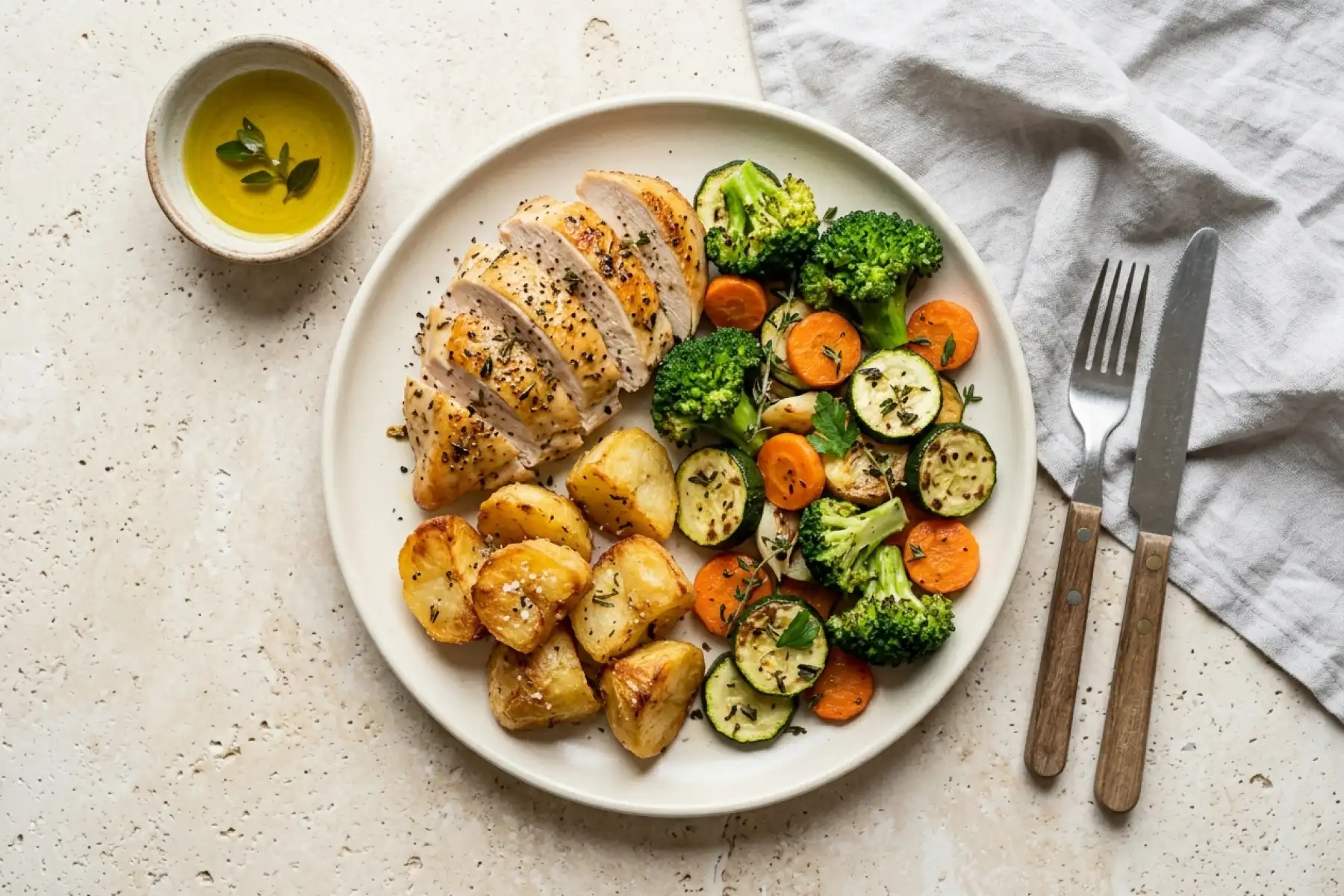
Roast Chicken, Potatoes & Veg

150 g roast chicken with 250 g potatoes roasted in olive oil, plus carrots, broccoli and a proper gravy.

650 kcal P 45g C 65g F 22g
Snack 5 min

Hot Chocolate & Oatcakes

Real hot chocolate made with milk, plus two oatcakes with a little cheese.

300 kcal P 12g C 32g F 13g

Note: Lunch is entirely plant-based and nobody would describe it as a sacrifice. That is the standard worth aiming for on meat-free days.

3

Day 3

Wednesday
Fish day
1,910 kcal 100g protein 224g net carbs 66g fat
Breakfast 10 min

Eggs & Avocado on Wholegrain Toast

Two poached eggs and half a mashed avocado on two slices of wholegrain toast, with chilli flakes and lemon.

470 kcal P 22g C 42g F 24g
Lunch 30 min

Lentil & Vegetable Soup with Sourdough

A deep bowl of lentil, carrot and celery soup with two slices of sourdough and a drizzle of olive oil on top.

520 kcal P 24g C 74g F 13g
Dinner 25 min

Salmon, Rice & Stir-Fried Greens

140 g salmon with 180 g cooked rice and pak choi stir-fried with garlic, ginger and a little sesame oil. Cook extra salmon and rice.

660 kcal P 40g C 68g F 24g
Snack 2 min

Banana & Greek Yogurt

A banana with 150 g Greek yogurt. Good before or after a workout, good in front of the television.

260 kcal P 14g C 40g F 5g

Note: Oily fish twice a week is one of the few dietary recommendations with genuinely strong evidence behind it. This is one of the two.

4

Day 4

Thursday
Leftovers
1,880 kcal 106g protein 230g net carbs 59g fat
Breakfast 4 min + overnight

Overnight Oats with Apple & Cinnamon

60 g oats soaked in 200 ml milk overnight with grated apple, cinnamon and 10 g mixed seeds.

450 kcal P 17g C 68g F 12g
Lunch 6 min

Leftover Salmon Rice Bowl

Yesterday’s salmon flaked cold over rice with edamame, cucumber ribbons, soy and a little rice vinegar.

540 kcal P 36g C 60g F 16g
Dinner 25 min

Chicken Fajitas

150 g chicken with peppers and onion in fajita spice, two tortillas, 30 g cheese, salsa and guacamole.

660 kcal P 48g C 62g F 24g
Snack 4 min

Popcorn & an Orange

25 g popcorn, air-popped and lightly salted, with an orange.

230 kcal P 5g C 40g F 7g

Note: Fajitas are the family-friendly meal here — put the components on the table and let everyone build their own portion.

5

Day 5

Friday
Fast and easy
1,940 kcal 108g protein 230g net carbs 61g fat
Breakfast 6 min

Smoothie Bowl

200 g yogurt blended with a banana and 100 g frozen berries, topped with 30 g oats and 10 g seeds. Eaten with a spoon, not a straw.

470 kcal P 22g C 66g F 12g
Lunch 12 min in a microwave

Jacket Potato with Tuna & Sweetcorn

A 300 g baked potato with a tin of tuna, sweetcorn and light mayo, and a side salad.

540 kcal P 36g C 72g F 10g
Dinner 20 min

Pork Stir Fry with Noodles

150 g pork loin strips with peppers, mangetout and spring onion through 80 g dry noodles, with hoisin and sesame.

680 kcal P 44g C 78g F 20g
Snack 1 min

Dark Chocolate & Brazil Nuts

20 g of 70% dark chocolate with 20 g brazil nuts. Written into the plan on purpose.

250 kcal P 6g C 14g F 19g

Note: Friday is the day most plans fall over. Putting chocolate in the plan on Friday is not a concession — it is the design.

6

Day 6

Saturday
Weekend food
1,960 kcal 112g protein 208g net carbs 74g fat
Breakfast 20 min

A Sensible Cooked Breakfast

Two eggs, two grilled bacon medallions, baked beans, mushrooms and grilled tomato with one slice of toast. Grilled, not fried.

500 kcal P 32g C 42g F 22g
Lunch 30 min

Halloumi & Chickpea Grain Bowl

60 g griddled halloumi and 100 g chickpeas over 150 g cooked bulgur, with roasted courgette and pepper and a tahini-lemon dressing.

600 kcal P 26g C 70g F 24g
Dinner 35 min

Homemade Pizza with Rocket

A wholemeal base with tomato, 60 g mozzarella and leftover chicken, finished with rocket and a little olive oil after baking.

640 kcal P 42g C 72g F 20g
Snack 2 min

Greek Yogurt, Honey & Pistachios

150 g Greek yogurt with honey and 10 g chopped pistachios.

220 kcal P 12g C 24g F 8g

Note: Homemade pizza lands around 640 calories. The same pizza delivered lands near 1,200. The difference is cheese quantity and base thickness, nothing else.

7

Day 7

Sunday
Cook for the week
2,000 kcal 101g protein 244g net carbs 63g fat
Breakfast 20 min

Pancakes with Berries & Yogurt

Two proper pancakes with 100 g berries, 100 g Greek yogurt and a thin pour of maple syrup.

470 kcal P 18g C 66g F 14g
Lunch 60 min

Sunday Roast

150 g roast chicken with 200 g roast potatoes, carrots, peas and gravy. A normal roast dinner, plated once.

620 kcal P 46g C 62g F 18g
Dinner 35 min

Vegetable & Bean Chilli with Rice

Mixed beans, peppers, courgette and tomato with chipotle, over 150 g cooked rice, with 30 g cheese and sour cream.

610 kcal P 24g C 88g F 16g
Snack 2 min

Cheese, Oatcakes & Grapes

30 g cheddar with four oatcakes and a small bunch of grapes.

300 kcal P 13g C 28g F 15g

Note: Plate the roast once and put the rest away before you sit down. Seconds are where a 620-calorie meal quietly becomes a 1,000-calorie one.

Week at a glance
1,940 kcal · 226g net carbs, averaged across 7 days
Build mine

The grocery list

One person, seven days. This is an ordinary supermarket shop — no speciality aisles, no protein powder, nothing that needs ordering online.

0 of 58 ticked — ticks are saved in this browser.

Meat, fish & eggs

7

Dairy & chilled

10

Produce

19

Pantry & freezer

22

If the plan does not fit you

No fixed plan survives contact with a real person’s allergies, budget and schedule. These are the swaps that keep the macros intact.

Vegetarian

Swap chicken for halloumi, tofu or extra beans, salmon for a bean burger, and the mince for lentils. Tuesday and Sunday are already meat-free, so only four meals actually need changing.

You want faster fat loss

Cut the daily snack and reduce each starch portion by a quarter. That lands near 1,550 calories with the same food and the same shape, which is roughly our calorie deficit plan.

You train hard four days a week

Raise protein to about 140 g by adding 150 g of Greek yogurt or 100 g of chicken a day, and put the extra carbs on training days rather than spreading them evenly.

Gluten free

Rice, quinoa, potato, corn tortillas and gluten-free oats cover every starch here. Bulgur and regular pasta are the only two items that need a genuine substitute.

Cooking for a family

Every dinner scales by multiplying. Serve the starch separately so growing teenagers can take more without you rebuilding the meal.

You skip breakfast

Fine — roll the calories into lunch and dinner. Meal timing has no independent effect on fat loss; forcing breakfast when you are not hungry just adds calories.

What to eat, what to skip

Eat freely

  • All lean and fatty meats, in sensible portions
  • Fish twice a week, at least one of them oily
  • Eggs and dairy, full-fat or reduced-fat as you prefer
  • Wholegrains: oats, brown rice, wholemeal bread, bulgur, quinoa
  • Potatoes and sweet potatoes, skins on
  • Beans, lentils and chickpeas — the most underused food on this list
  • Vegetables at every lunch and dinner, aiming for half the plate
  • Two or three pieces of fruit a day
  • Olive oil, nuts, seeds and avocado as the main fats
  • Dark chocolate, cheese and bread, in the portions written here
  • Tea, coffee, water, and alcohol in moderation

Leave these out

  • Sugary drinks and fruit juice — calories with no fullness at all
  • Eating from the pan or the packet instead of a plate
  • Deep-fried food as a regular item rather than an occasional one
  • Processed meat most days: bacon and sausages are weekly, not daily
  • Very large restaurant and takeaway portions, which run double what you would plate
  • Snacking without deciding to, especially while cooking
  • Labelling a food as a cheat, which tends to make the portion bigger
  • Fat-free products where the fat was replaced with sugar
  • Drinking most of your calories at the weekend
  • Restarting on Monday instead of continuing from the next meal

Balanced does not mean unmeasured

The one failure mode of a plan with no banned foods is portion creep: nothing is off limits, so nothing gets counted. Keep an eye on these four and the plan holds without you tracking a thing.

Oil
1 tbsp per meal
A poured glug is easily three times a measured spoon
Starch
A quarter plate
Roughly 150 g cooked rice or pasta, 250 g potato
Fibre
30 g+/day
Legumes, wholegrains, skins on, fruit whole
Alcohol
Counts fully
Two glasses of wine is roughly this plan's daily snack, twice over

Six things that make this week easier

Build the plate, not the meal

Half vegetables, a quarter protein, a quarter starch. Applied to any cuisine, in any kitchen, this single habit replaces most of what calorie counting does.

Cook once, eat twice, deliberately

The bolognese, the salmon, the roast chicken all reappear. Building leftovers into the plan is the difference between cooking seven times and cooking four.

Decide about alcohol in advance

A bottle of wine is roughly 600 calories and it disappears without being noticed. Deciding on Tuesday what Saturday looks like beats deciding on Saturday.

Aim for thirty plants a week

Count every different vegetable, fruit, grain, nut, seed and legume. This plan gets close on its own, and variety feeds gut bacteria better than quantity does.

Judge it over a month

A balanced plan moves the scale slowly, so weekly readings are mostly noise. Take a monthly average and compare averages, or you will quit something that is working.

Never restart, just continue

One big meal changes nothing over a month. Waiting until Monday to resume turns a 600-calorie surplus into a 4,000-calorie one. Continue at the next meal.

Free generator

This plan is built for an average person. You are not one.

The menu above assumes about 1,940 calories a day and no allergies. Give us your height, weight, goal and the foods you refuse to eat, and the generator rebuilds this entire week around your actual numbers — recipes, macros and a fresh grocery list included.

No signup. No card. Takes about 30 seconds.

Questions people ask about this plan

What does a balanced diet actually mean?

In practice it means getting calories from all three macronutrients in roughly the proportions guidelines suggest — 45–65% carbs, 20–35% fat, 10–35% protein — while eating enough fibre, vitamins and minerals from whole foods. This plan sits at 47/31/22. There is nothing magic about those exact numbers; they are simply a range that works for most people without excluding anything.

Will I lose weight on a balanced meal plan?

It depends entirely on whether 1,940 calories is below your maintenance. For a smaller or less active adult it is a mild deficit and you will lose slowly. For a larger or more active one it is maintenance. Use the calorie calculator to find your number, then adjust portions rather than assuming this plan is a weight loss plan.

Is 1,940 calories the right amount for me?

It is a reasonable middle for an average adult, but individual maintenance ranges from roughly 1,600 to 3,000 depending on size, sex, muscle mass and activity. Treat 1,940 as a starting point: run it for two weeks, weigh yourself at the same time each morning, and adjust by 200 calories in either direction based on what the average does.

Why is nothing banned on this plan?

Because banning is what breaks adherence, and adherence is the only variable that matters over a year. Restriction reliably increases how much you want the restricted food, and it makes ordinary social eating feel like a failure. Including pizza and chocolate in measured amounts means there is nothing to fall off.

Is this the same as the Mediterranean diet?

It leans that way without being strict about it. Olive oil as the main fat, fish twice weekly, legumes, plenty of vegetables and wholegrains, meat present but not dominant — those are the Mediterranean pattern’s main features and they are all here. It is the eating pattern with the strongest evidence for cardiovascular health and longevity.

Can I follow this as a vegetarian?

Easily. Two days are already meat-free, and the rest swap cleanly: halloumi, tofu, extra beans or a bean burger in place of the chicken and salmon, lentils in place of the mince. Protein will land nearer 85 g, which is still comfortably adequate for a non-athlete.

How much fibre should I be getting?

Around 30 g a day, against a typical intake of 18. This plan lands near 35 because of the legumes, wholegrains, fruit and vegetables. If you are coming from a low-fibre diet, increase gradually over a week or two and drink more water, or the change will be uncomfortable.

Can I drink alcohol on this plan?

Yes, but count it. Alcohol carries seven calories per gram and it is not accounted for anywhere in these numbers. A large glass of wine is about 200 calories, a pint of beer about 210. Two of either is roughly this plan’s entire daily snack allowance, twice over.

Do I need to weigh my food?

Not long term. Weighing for one week is genuinely useful, because it calibrates your eye — most people underestimate oil, cheese, nuts and cereal by a wide margin. After that the plate method does the job, and you can re-weigh for a few days if the results stall.

What do I do after seven days?

Repeat it, rotating proteins and vegetables so it does not get stale. A balanced plan is not an intervention with an endpoint; it is a template you keep using. If you want the same template built around your own calorie target, household and dislikes, the meal plan generator will do it in about thirty seconds.
Medical disclaimer. This plan is general nutrition information, not medical advice. Calorie and macro figures are estimates for the portions described and will vary with brands, cuts and cooking method. Talk to a doctor or registered dietitian before starting any new diet, especially if you are pregnant, breastfeeding, managing a medical condition, or taking medication that needs dosing around food.