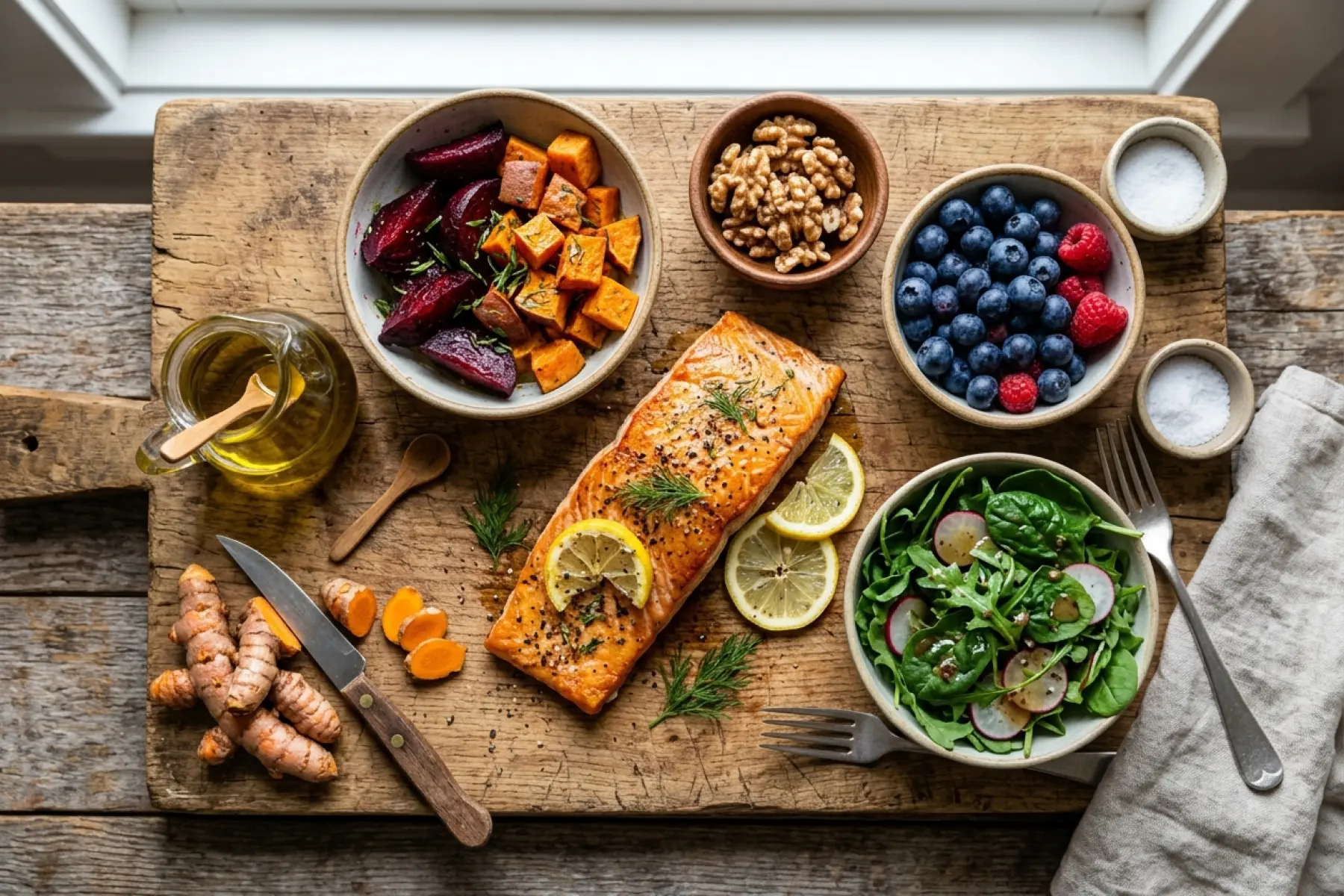
Does an anti-inflammatory diet actually work?
The pattern, high in fatty fish, vegetables, legumes, nuts and olive oil, low in ultra-processed food and alcohol, is consistently associated with lower inflammatory markers, and it overlaps almost exactly with the Mediterranean diet, which has the best trial evidence of any dietary pattern. What it is not is a treatment for diagnosed inflammatory disease.
What are the worst foods for inflammation?
The pattern matters more than any single item, but the usual suspects are ultra-processed food eaten daily, large amounts of refined carbohydrate and sugar, processed meat, and excess alcohol. Note that all of these are about frequency and quantity, not a single occasion.
Is turmeric worth taking?
Turmeric in cooking is pleasant and harmless. Curcumin supplements have some supportive research but absorption from food is poor, doses in studies are high, and they can interact with anticoagulants. Worth discussing with a pharmacist before buying.
How long until I feel a difference?
Energy and digestion often shift within a couple of weeks, largely because fiber and food quality change. Measurable changes in inflammatory markers take longer. Six to twelve weeks is a fair expectation, and the effect is modest rather than dramatic.
Can I follow this with rheumatoid arthritis?
You can eat this way alongside your treatment, and many rheumatology teams encourage a Mediterranean-style diet. What you should not do is reduce or stop medication on the strength of a dietary change. Talk to your rheumatologist.
Is nightshade vegetables causing inflammation a real thing?
There is no good evidence that tomatoes, peppers, eggplants and potatoes drive inflammation in people without a specific sensitivity. They are used throughout this plan because they are nutrient-dense and high in polyphenols. If you personally react to them, exclude them, but there is no reason to do so pre-emptively.
Do I need to eat fish three times a week?
It is the most efficient way to get EPA and DHA, which are the omega-3s most directly implicated. If you do not eat fish, walnuts and milled flaxseed give you ALA, which converts poorly, so an algae-oil supplement is a reasonable addition.
Is this plan good for weight loss?
At roughly 1,780 calories it is maintenance for many adults rather than a deficit. It is a quality-first plan, not a weight-loss one. If you want both, check your maintenance with the calorie calculator and adjust the starch portions down.
Why is the fat content so high?
Because the pattern that performs well in trials is high in unsaturated fat, not low in fat. Almost all of it here is olive oil, fatty fish, nuts and seeds, the fats associated with better cardiovascular and inflammatory outcomes.
Can I get this adapted to my tastes?
Yes, the plan generator builds the same pattern around foods you actually like, which matters far more than whether you enjoy beets specifically.