Science-Backed Guide

Nutrition & Healthy Eating Guide

Everything you need to know about optimizing your nutrition. Simple, practical, and evidence-based strategies to fuel your health goals.

By Reuben L. Royston
Last updated June 28, 2026

Nutrition is the science of how food fuels your body. A balanced diet supplies three macronutrients — protein, carbohydrates, and fats — in the National Academies’ Acceptable Macronutrient Distribution Ranges of 10–35% protein, 45–65% carbohydrates, and 20–35% fats, plus the vitamins and minerals that drive essential biological reactions. This guide, aligned with the federal Dietary Guidelines for Americans, explains each nutrient, how to estimate your daily needs, and how to build eating habits you can actually sustain.

What Are Macronutrients?

Macronutrients are the foundational nutrients your body requires in large quantities to sustain energy, promote growth, and maintain cellular structure. The three main macronutrients are proteins, carbohydrates, and healthy fats. Achieving a balanced distribution of these nutrients supports sustained metabolic health and physical performance.

Protein

Essential for building and repairing muscle tissues, supporting cellular growth, immune cell function, and promoting satiety.

Sources: Chicken, turkey, wild fish, eggs, Greek yogurt, lentils, tofu, tempeh.

Carbohydrates

The primary energy fuel for your central nervous system, brain, and active muscles. Focus on high-fiber options.

Sources: Quinoa, brown jasmine rice, sweet potatoes, oats, fruits, broccoli.

Healthy Fats

Crucial for fat-soluble vitamin absorption, hormone synthesis, brain structural integrity, and joint health.

Sources: Extra virgin olive oil, avocados, raw nuts, seeds, salmon, mackerel.

Macronutrient Quick Reference Table

Macronutrient Energy Density Recommended Daily % Key Functional Benefit
Protein 4 Calories/gram 10% - 35% of total calories Muscle synthesis & cellular recovery
Carbohydrates 4 Calories/gram 45% - 65% of total calories Sustained metabolic & physical energy
Healthy Fats 9 Calories/gram 20% - 35% of total calories Hormone production & cell health

Micronutrients: Essential Vitamins & Minerals

While macronutrients provide structural building blocks and energy, micronutrients (vitamins and minerals) are essential to trigger chemical reactions within the body. Consuming a diverse rainbow of whole foods ensures your cells obtain these critical nutrients.

Vitamins (Water & Fat-Soluble)

  • Water-Soluble (B-Complex, Vitamin C): Dissolve in water and are not stored by the body. They must be replenished daily to support energy production and immune system function.
  • Fat-Soluble (Vitamins A, D, E, K): Absorb best when paired with healthy dietary fats. They accumulate in the liver and fatty tissues to support bone strength, vision, and antioxidant defense.

Essential Minerals

  • Macrominerals (Calcium, Magnesium, Potassium): Required in larger amounts to sustain proper electrolyte balance, muscle contraction, and nerve transmission.
  • Trace Minerals (Iron, Zinc, Selenium): Needed in smaller doses but are vital for carrying oxygen (hemoglobin), creating DNA structures, and defending against pathogens.

Optimizing Nutrient Absorption

Merely eating nutrient-dense foods isn't enough; your body must absorb them. Leverage these science-backed dietary pairings to maximize your nutrient absorption rates:

  • Iron and Vitamin C: Drizzle fresh lemon juice over spinach salads or eat bell peppers alongside lentils. Vitamin C converts non-heme plant-based iron into a more bioavailable form (NIH Office of Dietary Supplements).
  • Fat-Soluble Vitamins and Healthy Fats: Toss salad greens (rich in Vitamin A and K) with extra virgin olive oil, or eat carrots with a handful of walnuts. Dietary fats facilitate absorption of vitamins A, D, E, and K.
  • Calcium and Vitamin D: Combine calcium-rich foods with Vitamin D (like eggs, mushrooms, or fortified foods) to actively transport calcium across your intestinal lining.

How Many Calories Do You Need?

Calories represent the energy value of the foods you eat. Your daily requirements depend on your age, biological sex, weight, height, and active lifestyle. The fundamental equation of health is energy balance:

Lifestyle / Gender Sedentary Range Moderately Active Highly Active Range
Women 1,600 - 1,800 kcal 1,800 - 2,200 kcal 2,200 - 2,400+ kcal
Men 2,000 - 2,200 kcal 2,200 - 2,600 kcal 2,600 - 3,000+ kcal
Caloric Deficit

Consume fewer calories than you burn. Leads to weight and fat loss.

Caloric Maintenance

Consume equal to what your body burns. Keeps body weight stable.

Caloric Surplus

Consume more calories than you burn. Stimulates muscle growth.

Want to know your exact daily energy expenditure? Use our free calorie calculator to customize your goals.

Building a Balanced Plate

You do not need to constantly weigh your meals to remain on track. The visual "Plate Method" is a simple and sustainable framework that guarantees you hit macronutrient targets naturally.

1/2

Fiber-Rich Vegetables

Fill half your plate with colorful, non-starchy vegetables. They expand in the stomach to keep you full while supplying protective plant compounds.

1/4

Lean Protein

Ensure a quarter of your plate contains quality protein. It prevents metabolic slowdown and signals hormones that regulate fullness.

1/4

Complex Carbohydrates

Dedicate the final quarter to low-glycemic starches like quinoa or sweet potatoes for long-term glycogen replenishment.

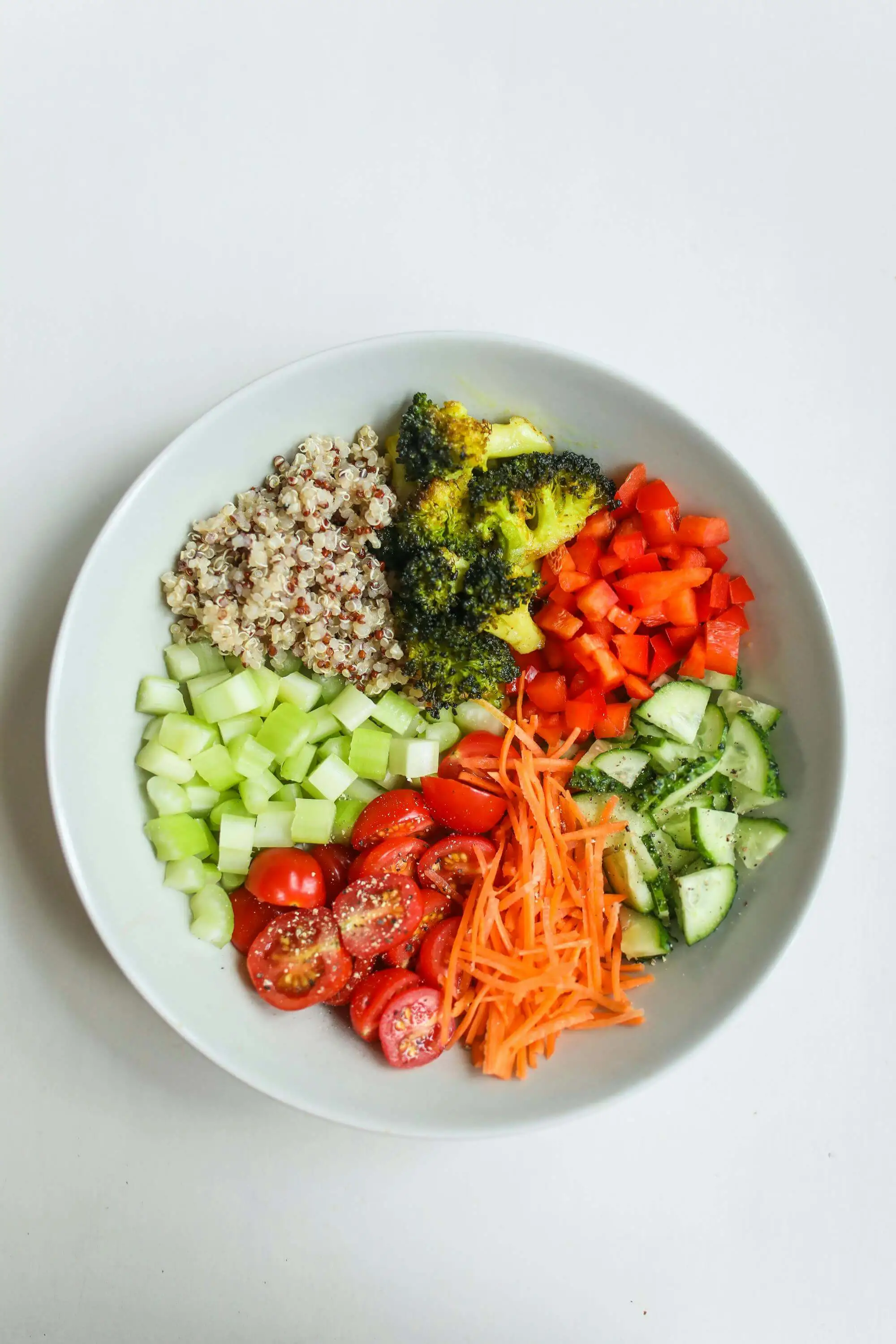
Balanced meal prep food bowl filled with lean protein, complex carbohydrates, vegetables, and healthy fats

The Perfect Plate Method

Hand-Based Portion Control

For an effortless meal portion control check when eating out, use your hand as a reference:

Protein
1 Palm size
Vegetables
1 Fist size
Carbohydrates
1 Cupped hand
Healthy Fats
1 Thumb size

Healthy Grocery Shopping Checklist

Healthy eating begins with what you put in your cart. Keep your kitchen stocked with these raw ingredients to facilitate seamless weekly meal prep:

Produce
  • Spinach, kale & broccoli
  • Bell peppers & onions
  • Fresh berries & apples
  • Sweet potatoes & squash
Proteins & Fats
  • Chicken breasts & turkey
  • Salmon, sardines, & eggs
  • Olive oil & avocado oil
  • Greek yogurt & almonds
Grains & Legumes
  • Quinoa & steel-cut oats
  • Brown jasmine rice
  • Black beans & red lentils
  • Chia seeds & flaxseeds

Hydration & Water Intake Guidelines

Water accounts for approximately 60% of your body weight and is the medium in which every cellular metabolic process occurs. Staying hydrated optimizes kidney function, skin health, cognitive clarity, and athletic performance.

Calculating Your Water Intake

While standard templates recommend 8 cups of water daily, a more precise formula accounting for physical weight is:

~30 to 35 milliliters of water per kilogram of body weight.

Add an extra 500ml for every 30 minutes of sweat-inducing exercise to account for active fluid losses.

Thirst Mimicking Hunger Signals

The brain's hypothalamus processes both thirst and appetite. When mild dehydration begins, these pathways can overlap, sending a signal that mimics hunger. The next time you experience an unexpected mid-day craving, drink a glass of water first.

Common Nutrition Mistakes to Avoid

Embarking on a nutritional reset is admirable, but avoid these common physiological and lifestyle pitfalls:

Skipping Meals to Speed Weight Loss

This spikes cortisol (stress hormone) levels and often leads to rebound binge eating in the evening due to extreme physiological hunger.

Cutting Out Entire Food Groups Unnecessarily

Eliminating whole categories like carbohydrates or dairy without medical need creates massive micronutrient gaps and makes dieting unsustainable.

Chronic Mild Dehydration

Failing to drink enough clean water causes fatigue, sluggish digestion, reduced metabolic rates, and bloating as the body holds onto water weight.

Relying on Dietary Supplements

Powders, bars, and pills are designed to augment health, not act as structural foundations. They lack the synergistic fiber and bioactive compounds of real food.

Frequently Asked Questions

What is the difference between simple and complex carbohydrates?

Simple carbohydrates (like refined sugar, white bread, and soda) are absorbed rapidly, causing sharp spikes and crashes in blood glucose. Complex carbohydrates (like oats, brown rice, and sweet potatoes) contain fiber, which slows digestion, providing sustained, long-lasting energy.

How do I calculate my exact daily calorie requirements?

You can calculate your Basal Metabolic Rate (BMR) using equations like the Mifflin-St Jeor equation (based on height, weight, age, and sex), and then multiply that number by an activity multiplier (ranging from 1.2 for sedentary to 1.9 for highly active) to find your Total Daily Energy Expenditure (TDEE). Alternatively, use our Calorie Calculator.

Can I build muscle on a plant-based or vegan diet?

Yes! You can successfully build muscle on a plant-based diet by consuming sufficient protein from diverse sources to ensure a complete amino acid profile. Excellent sources include lentils, chickpeas, black beans, tofu, tempeh, seitan, quinoa, and high-quality plant-based protein powders.

How does dehydration affect weight loss and metabolism?

Dehydration can decrease physical performance, slow digestive motility, and reduce your body's efficiency in burning fat (lipolysis). It also leads to thirst signals that are easily mistaken for hunger, causing unnecessary food consumption.

Should I avoid dietary fats to lose weight?

Absolutely not. Healthy fats (such as monounsaturated and polyunsaturated fats) are vital for cellular integrity, hormone production, and nutrient absorption. While fats are calorie-dense (9 calories per gram), consuming them in moderation helps you stay full longer and supports overall metabolic wellness.

How do I design a weekly meal prep schedule?

Start by picking two days a week (e.g., Sundays and Wednesdays) for meal preparation. Plan your meals, construct a detailed grocery shopping list, prep ingredients (washing/chopping veggies), and batch-cook grains and proteins. Store portioned meals in airtight containers in the refrigerator. Read our complete guide to Meal Prep Tips to learn more.

Ready to Put This Into Practice?

Get a personalized meal plan that follows all these nutrition principles. It's free and takes just 2 minutes.

About the Author

Reuben L. Royston

Nutrition and meal-planning content specialist at MakeMealPlan. He turns evidence-based nutrition science — calorie balance, macronutrients, and sustainable dieting — into clear, practical calculators and guides.