You finish a tough workout and immediately wonder if you should grab a protein shake, eat a meal, or just wait until you're hungry.
Or maybe you're on the opposite end of the spectrum.
You've got a workout coming up in an hour, but you're not sure whether eating beforehand will help your performance or leave you feeling sluggish.
These are some of the most common nutrition questions people ask when they start exercising. The truth is that what you eat before and after a workout can have a significant impact on your energy levels, performance, recovery, and long-term results.
Whether your goal is building muscle, losing fat, improving endurance, or simply feeling better during exercise, understanding workout nutrition can help you get more from the effort you're already putting in.
Let's break down what to eat before and after a workout and why it matters.
Why Workout Nutrition Matters
Think of your body like a car.
A car needs fuel before a long drive and maintenance afterward to keep running smoothly. Your body works in a similar way.
Before exercise, your body needs energy to power movement. During exercise, it uses stored carbohydrates and other energy sources to support performance. Afterward, it begins repairing muscle tissue and replenishing depleted energy stores.
The foods you choose can influence how effectively these processes occur.
Good workout nutrition doesn't need to be complicated. In most cases, it comes down to providing your body with the right balance of carbohydrates, protein, and hydration at the right times.
What to Eat Before a Workout
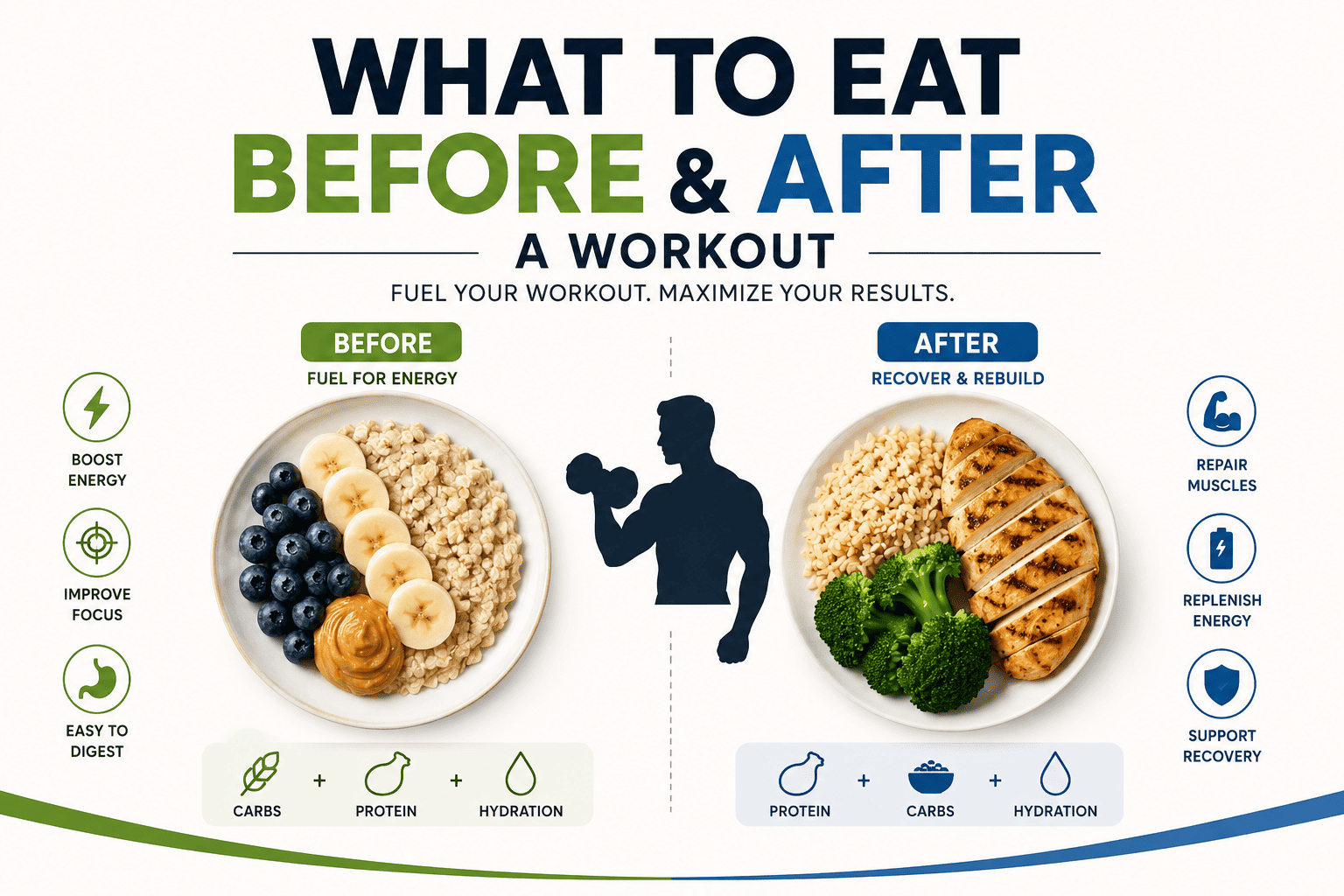
The primary goal of a pre-workout meal is to provide energy.
Carbohydrates are especially important because they are your body's preferred fuel source during many types of exercise.
Protein can also be helpful before training because it provides amino acids that support muscle maintenance and recovery.
The Ideal Pre-Workout Meal
A balanced pre-workout meal typically includes:
- Complex carbohydrates
- Lean protein
- Moderate amounts of healthy fats
- Adequate hydration
Example Pre-Workout Meals
2 to 3 Hours Before Exercise
- Grilled chicken with rice and vegetables
- Oatmeal with Greek yogurt and berries
- Turkey sandwich on whole-grain bread
- Sweet potato and lean beef
These meals provide sustained energy and enough time for digestion.
30 to 60 Minutes Before Exercise
If you're eating closer to your workout, choose foods that are easier to digest.
Examples include:
- Banana and peanut butter
- Greek yogurt with fruit
- Protein smoothie
- Rice cakes with turkey slices
Many people find that lighter meals work best when training shortly after eating.
The Best Foods Before Different Types of Workouts
Not every workout places the same demands on your body.
Before Strength Training
Weightlifting and resistance training benefit from both carbohydrates and protein.
Good options include:
- Oatmeal and protein powder
- Chicken and rice
- Greek yogurt and fruit
These meals provide energy while supporting muscle performance.
Before Cardio
For running, cycling, or other endurance activities, carbohydrates become especially important.
Examples include:
- Banana
- Toast with honey
- Oatmeal
- Fruit smoothie
Carbohydrates help maintain energy levels during longer training sessions.
Before Early Morning Workouts
Some people exercise shortly after waking up.
If you don't have time for a full meal, a simple snack may be enough.
Examples include:
- Banana
- Protein shake
- Small bowl of oatmeal
- Piece of fruit
The goal is to provide quick energy without causing digestive discomfort.
Foods to Avoid Before a Workout
Some foods can make exercise less comfortable.
Heavy Fried Foods
Fried foods often digest slowly and may leave you feeling sluggish.
Large High-Fat Meals
Healthy fats are important, but consuming large amounts immediately before exercise can slow digestion.
Excessive Fiber
While fiber is excellent for overall health, eating large amounts right before a workout can sometimes cause stomach discomfort.
Sugary Snacks
A candy bar might provide a quick burst of energy, but many people experience an energy crash soon afterward.
Choosing more balanced foods tends to produce more stable performance.
What to Eat After a Workout
Once your workout is complete, your body shifts into recovery mode.
Muscle tissue begins repairing itself, and energy stores need replenishment.
This is where post-workout nutrition becomes important.
The Two Key Nutrients
After exercise, focus on:
- Protein
- Carbohydrates
Protein provides the building blocks needed for muscle repair.
Carbohydrates help replenish glycogen, which is the stored form of energy your muscles use during exercise.
Best Post-Workout Foods
Protein-Rich Options
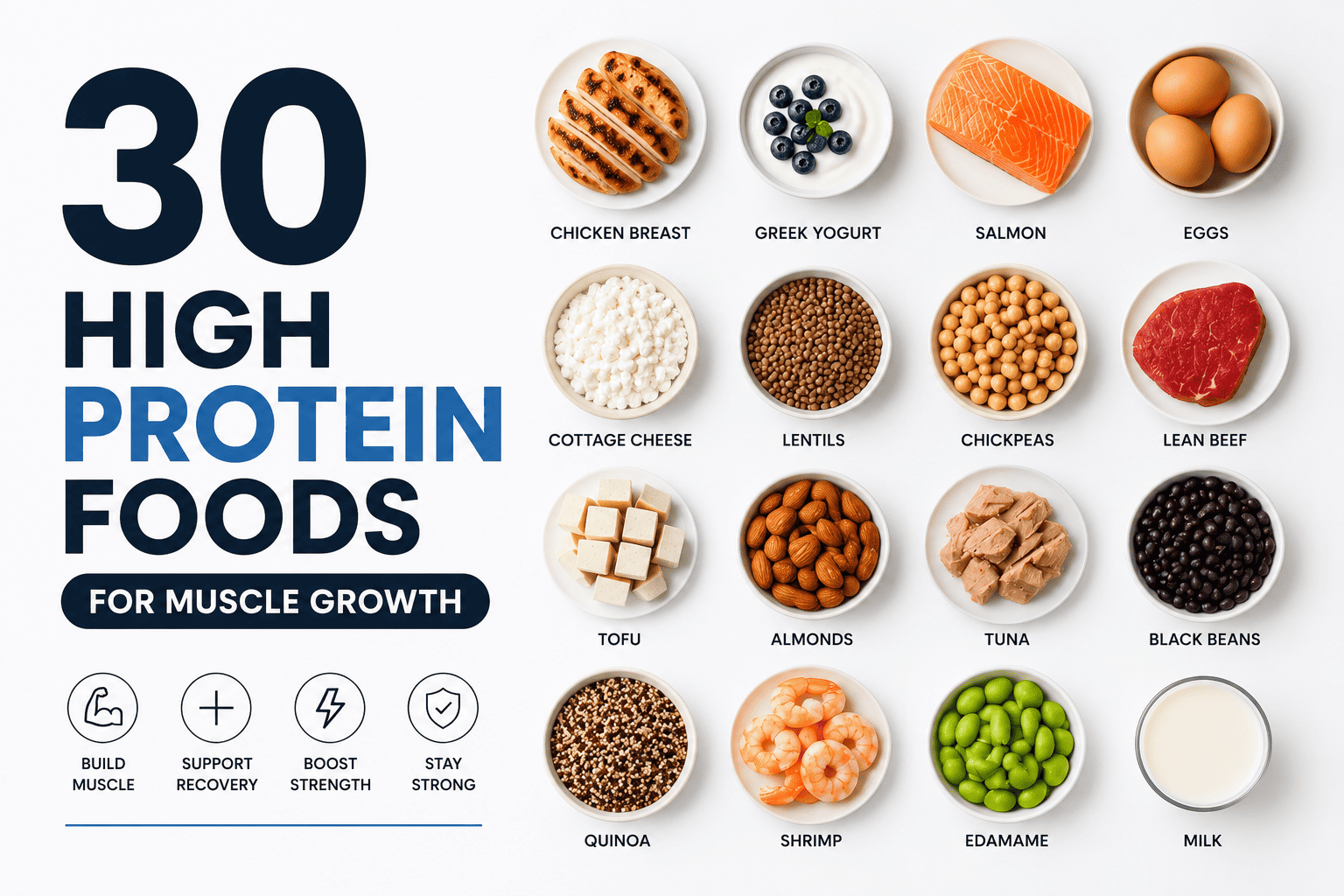
- Chicken breast
- Eggs
- Greek yogurt
- Cottage cheese
- Fish
- Protein shakes
- Lean beef
Healthy Carbohydrate Sources
- Rice
- Potatoes
- Sweet potatoes
- Oats
- Fruit
- Whole-grain bread
Combining these nutrients creates an effective recovery meal.
Sample Post-Workout Meals
Option 1
Grilled chicken breast, rice, and vegetables
Option 2
Protein shake and banana
Option 3
Greek yogurt with berries and oats
Option 4
Eggs and whole-grain toast
Option 5
Salmon, sweet potato, and broccoli
These meals provide protein for recovery and carbohydrates to restore energy.
Is the Anabolic Window Real?
You may have heard that you must consume protein within 30 minutes of finishing a workout.
The reality is a bit more flexible.
While eating soon after exercise can be beneficial, the overall quality of your daily nutrition matters much more than hitting a strict 30-minute deadline.
For most people, consuming a protein-rich meal within a couple of hours after training works perfectly well.
Consistency beats perfection.
Hydration Matters Too
Food often gets most of the attention, but hydration plays an equally important role.
Even mild dehydration can affect performance and recovery.
Before your workout:
- Drink water throughout the day
- Stay hydrated before arriving at the gym
During longer workouts:
- Sip water regularly
- Consider electrolyte drinks during intense sessions lasting more than an hour
After exercise:
- Replace fluids lost through sweat
- Continue drinking water throughout the day
A simple water bottle can be one of the most effective workout tools you own.
Common Workout Nutrition Mistakes
Skipping Meals Before Exercise
Many people train on an empty stomach despite feeling low on energy.
While fasted training works for some individuals, many perform better with at least a small pre-workout snack.
Not Eating Enough Protein
Protein supports muscle recovery and growth.
Failing to consume enough protein can slow progress over time.
Overestimating Calories Burned
A challenging workout does not automatically justify overeating afterward.
Many people accidentally consume more calories than they burned during exercise.
Ignoring Recovery Nutrition
Recovery starts as soon as your workout ends.
Providing your body with nutrients helps support the adaptation process.
Sample Full-Day Workout Nutrition Plan
Breakfast
Oatmeal with berries and Greek yogurt
Mid-Morning Snack
Banana and almonds
Lunch
Grilled chicken, brown rice, and vegetables
Pre-Workout Snack
Protein shake and fruit
Post-Workout Dinner
Salmon, sweet potato, and broccoli
Evening Snack
Cottage cheese and berries
This type of eating plan provides a balance of carbohydrates, protein, healthy fats, and micronutrients that support both performance and recovery.
Final Thoughts
The best workout nutrition plan doesn't require expensive supplements or complicated meal timing strategies.
For most people, success comes from following a few simple principles:
- Eat carbohydrates for energy before workouts.
- Include protein before and after training.
- Replenish energy stores with quality carbohydrates.
- Stay hydrated throughout the day.
- Focus on consistency rather than perfection.
Your workout may last one hour, but your nutrition choices influence how your body performs and recovers during the other twenty-three.
Fuel your body properly, recover well, and you'll give yourself the best chance to build strength, improve fitness, and achieve your goals over the long term.